

Reading time: 7 min
South Korea’s benchmark Kospi index hit a fresh record of 5,677 on Thursday, capping a rally that has seen the gauge more than double since President Lee Jae Myung took office on June 4, 2025. The milestone coincided with a Seoul court sentencing former President Yoon Suk Yeol to life in prison for leading the December 2024 insurrection that triggered the snap election bringing Lee to power — a verdict that closes one chapter of political turmoil even as questions mount over whether the stock market boom is papering over a reform vacuum.
When Lee was sworn in last June, the Kospi was trading around 2,770. He had campaigned on a pledge to usher in a “Kospi 5,000 era” during his five-year term — a target analysts widely dismissed as fanciful. The index breached 5,000 intraday on January 22, barely seven months into his presidency, and closed above the level for the first time on January 27. It has continued climbing since, gaining roughly 24% year-to-date in 2026 alone after surging 75.6% in 2025, which made it the world’s best-performing major stock index.
A Two-Stock Rally
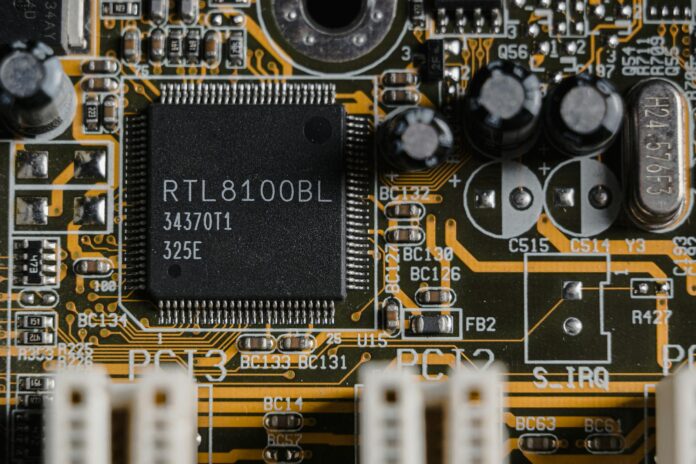
The driver of this extraordinary run is not government policy but the global artificial intelligence semiconductor supercycle. Samsung Electronics and SK Hynix — Korea’s two memory chip giants — together account for more than 40% of the Kospi’s total market capitalization and over 50% of the Kospi 200 index. Their combined market value has surpassed $1.1 trillion, now exceeding the combined capitalisation of Chinese tech conglomerates Alibaba and Tencent. South Korea’s total stock market valuation topped $3.3 trillion in the past week, overtaking Germany to become the world’s tenth largest.
Macquarie’s research describes the current environment as the “worst memory crunch in history,” with no signs of supply easing over the next two years. The brokerage estimates Samsung and SK Hynix together will account for 52% of total Korean corporate net profits in 2026 and 68% of the year-on-year profit increase. SK Hynix commands more than 60% of Nvidia’s high-bandwidth memory (HBM) supply, while Samsung is countering with its next-generation “zHBM” technology unveiled at Semicon Korea 2026, which promises to stack HBM directly atop GPUs for fourfold improvements in bandwidth and power efficiency over current HBM4 chips.
Analyst targets keep rising. JPMorgan in early February raised its base-case Kospi target to 6,000 and set a bull-case scenario of 7,500, citing consensus earnings upgrades of roughly 60% over six months for MSCI Korea. Goldman Sachs lifted its year-end forecast to 5,700, while Daeshin Securities pushed its first-half ceiling to 5,800.
Lee’s AI Budget — And Its Limits
To his credit, Lee has invested in the narrative. In November, he introduced his government’s first budget explicitly framed around the “artificial intelligence era,” allocating 10.1 trillion won ($7 billion) to AI initiatives — triple the 2025 figure. He has also unveiled a National Growth Fund to channel approximately $107 billion into AI and high-tech industries over five years, with additional spending on “physical AI” — integrating artificial intelligence into semiconductors, automobiles, shipbuilding and robotics.
Yet the uncomfortable reality, as William Pesek argues in Asia Times, is that the AI trade has made things “a bit too easy” for this administration. The Kospi rally is overwhelmingly a function of global demand for memory chips, not Korean government policy. Samsung was already the world’s largest memory producer before Lee took office; SK Hynix was already Nvidia’s primary HBM supplier. The government’s role has been largely to promise that it will facilitate what the market was already doing.
Lee himself has skin in the game. On May 28, 2025, while still a presidential candidate, he publicly invested 40 million won ($30,000) in two ETFs tracking the Kospi and Kosdaq. By the time the index hit 5,000, his KODEX 200 position had returned over 104%, yielding estimated gains exceeding 31 million won.
The Korea Discount Endures
Lee’s Democratic Party formed a dedicated “KOSPI 5000 Special Committee,” which was renamed the “K-Capital Market Committee” in early February after the target was achieved. The party has pushed three rounds of Commercial Act amendments since July 2025, aimed at introducing fiduciary duties for corporate directors, strengthening shareholder rights, and requiring companies to retire treasury shares after buybacks unless shareholders vote to retain them.
These are meaningful proposals on paper. But as Jeremy Chan of Eurasia Group notes, Lee “has proposed reforms” and “proposed increasing dividend payments and share buybacks” — yet has “recorded no such reform victories.” The so-called “Korea discount,” which causes Korean companies to trade at persistent valuation discounts to peers in Japan and Taiwan due to weak corporate governance and chaebol dominance, remains firmly in place.
This is a deeply familiar pattern. Virtually every Korean president over the past two decades has arrived with sweeping reform plans — deregulation, chaebol restructuring, levelling the playing field for startups — only to retreat when confronted with the scale of entrenched opposition. Moon Jae-in, Park Geun-hye, Lee Myung-bak and Roh Moo-hyun each followed this arc. Park was eventually impeached and co-opted by the very chaebol establishment she had pledged to reform. The Lee administration is 260 days old. The clock is ticking on whether it breaks the cycle.
Volatility and Structural Risks
The rally’s speed has generated its own fragilities. The Korean VIX — typically a gauge that spikes during market crashes — has surged to 47, a level previously seen only during the 2008 financial crisis and the 2020 pandemic. Paradoxically, this is happening while the market is hitting record highs. The anomaly traces to Korea’s massive autocallable structured products market: retail investors sell volatility to generate yield, but when indices rise sharply, these products get knocked out at an unprecedented rate, reducing the “supply” of volatility and forcing spot VIX higher. The Kospi’s trajectory in early February illustrated the risks — on February 2, the index plunged 5.26% in a single session on concerns about the incoming U.S. Federal Reserve chair, then rebounded 6.84% the next day to a record 5,288.
Concentration risk is equally concerning. Samsung and SK Hynix alone now constitute roughly 36% of the Kospi. A technological breakthrough by a Chinese or American competitor in memory semiconductors, or a meaningful decline in AI infrastructure spending, could erase hundreds of billions in value overnight. The leveraged exposure is growing: Korean regulators have approved single-stock 2x leveraged ETFs limited to Samsung, SK Hynix and Hyundai Motor, while margin trading has surged. Total domestic ETF net assets crossed 356 trillion won in early February, adding 50 trillion won in a single month.
Externally, the Trump tariff threat looms. On January 26, the U.S. president announced he was raising tariffs on South Korean goods from 15% to 25%, accusing Seoul’s legislature of failing to ratify a bilateral trade deal agreed in July 2025. The original framework had included $350 billion in Korean investment commitments across U.S. semiconductor, shipbuilding and biotech sectors. Seoul’s ruling Democratic Party scrambled to pass the enabling legislation, with the presidential office saying it had received no formal notification from Washington. The tariff escalation, if implemented, would hit Korean automakers particularly hard — automobiles account for 27% of South Korea’s exports to the United States.
Beyond the Index
For the 51 million South Koreans watching the Kospi climb, the picture on the ground is less exhilarating. Real wage growth remains stagnant. Household debt is sky-high. The costs of property, childcare and education continue to squeeze middle-class families. The economy has been stuck in what some economists call a “three-year low-growth trap,” with Trump’s trade war compounding the headwinds.
The Yoon verdict on Thursday brings political closure of a sort — the first life sentence for insurrection since former military dictator Chun Doo-hwan in 1996. But as Pesek concludes, political stability and a soaring stock index, however welcome, are not substitutes for the bold structural overhaul that successive Korean governments have articulated but never delivered. The AI boom has given Lee Jae Myung a remarkable tailwind. Whether he uses it to push through genuine reform — or simply surfs it to the end of his term — will determine whether the Kospi 5,000 era becomes more than a semiconductor-fuelled anomaly.
Sources: Asiatimes