Reading time: 4 min
The government-directed steelmaker will supply 36,000 tonnes of rail for the Ankara–İzmir high-speed line — a welcome order for a plant that has cost taxpayers £359 million to keep running since April.
The Contract
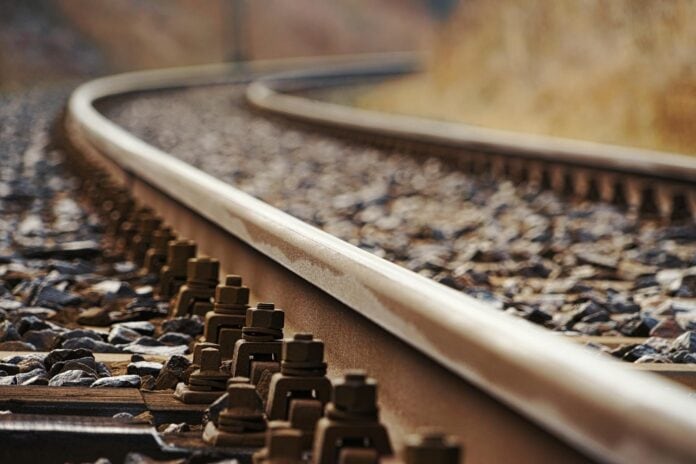
British Steel has secured an eight-figure contract — described by the company as worth tens of millions of pounds — to supply 36,000 tonnes of 60E2 rail for Turkey’s Ankara–İzmir high-speed railway, one of the largest infrastructure projects currently under construction in the country. The order from ERG International Group, which is building the line alongside Sauerwein & Schaefer Bau on behalf of the Turkish government, will be manufactured at British Steel’s Scunthorpe plant and delivered in 36-metre lengths throughout 2026. The deal is backed by UK Export Finance, which in 2022 guaranteed £1.8 billion through its Buyer Credit Scheme for the broader project, with financing provided by Credit Suisse and Standard Chartered.
The contract has triggered round-the-clock rail manufacturing at Scunthorpe for the first time in more than a decade and created 23 new roles. British Steel had previously supplied rail for earlier phases of the same project through ERG, and commercial director Craig Harvey said the company is pursuing additional steel product sales for the line. Chief commercial officer Lisa Coulson described the deal as a major achievement that underlines British Steel’s position as the UK’s only manufacturer of rail.
The Railway
The 503-kilometre Polatlı–İzmir high-speed line will cut the rail distance between Ankara and Turkey’s third-largest city from 824 to 624 kilometres, with trains running at up to 250 km/h and reducing the journey from 14 hours to roughly three and a half. Construction began in 2012, was suspended in 2018 when approximately half the civil works were complete, and restarted in 2022. The total project cost has reached ₺101.5 billion ($2.3 billion). Turkish officials are targeting completion by 2027, with the line projected to carry 13.3 million passengers and 90 million tonnes of cargo annually under Turkish State Railways (TCDD).
A Plant Running on Government Cash
The Turkish order is good news for British Steel, but it does not resolve the existential questions surrounding the Scunthorpe plant. The site — the last in the UK capable of producing virgin steel from iron ore — has been under government direction since April 2025, when Parliament was recalled on a Saturday to pass the Steel Industry (Special Measures) Act after Chinese owner Jingye Group stopped ordering raw materials and announced it was considering permanent closure. Jingye had claimed losses of £700,000 per day. The emergency legislation allowed the Secretary of State to intervene to prevent the blast furnaces from going cold, which would have rendered them permanently unusable and left the UK as the only G7 country unable to produce its own primary steel.
Since taking operational control, the government has spent approximately £359 million on working capital — roughly £34 million per month covering raw materials, salaries and running costs. Jingye still technically owns British Steel, and the government says it continues to seek a pragmatic solution. The long-term plan requires co-investment with a private sector partner to modernise and decarbonise the plant, but no such partner has been publicly identified. A Steel Strategy, promised for early 2026, is expected to set out the government’s broader vision. Industry Minister Chris McDonald framed the Turkish contract as evidence of that strategy in action.
Context: A Steel Strategy Still Missing
The rail contract follows a £500 million agreement with Network Rail signed in June 2025 to supply track for Britain’s domestic network. Together, the two orders provide meaningful work for Scunthorpe’s rail division, but the broader challenge remains structural. UK energy costs are among the highest in Europe, global overcapacity persists with China producing over half the world’s output, and the Scunthorpe blast furnaces are approaching the end of their operational lives after years of alleged underinvestment. Whether to reline the existing furnaces, transition to electric arc steelmaking, or pursue direct reduced iron technology remains unresolved.
For the 3,500 workers at Scunthorpe and the surrounding community, the Turkish deal buys time. The plant is producing, the order book is growing, and 24/7 operations are running again. But time, at £34 million a month, is expensive — and the question of who ultimately pays for British Steel’s transition to a sustainable model remains unanswered.