


Reading time: 4 min
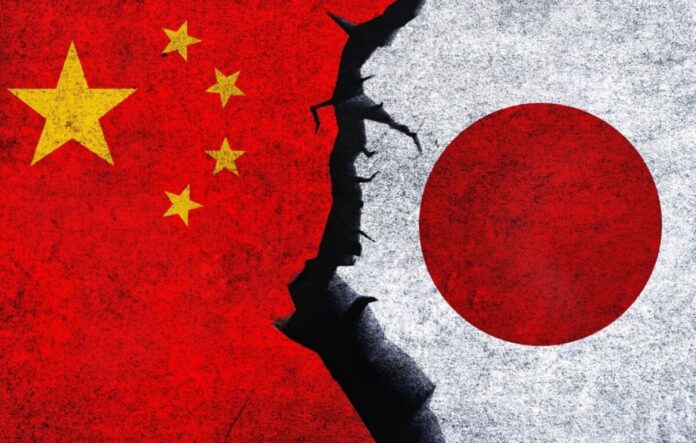
Beijing blacklisted 40 Japanese entities on the same day Trump’s 15% global tariff took effect, while a separate Section 301 investigation into Chinese trade practices threatens to unravel the one-year ceasefire agreed at last November’s Trump–Xi summit. The post-SCOTUS tariff landscape leaves both sides with less room to manoeuvre — and more reason to escalate.
The Japan Front: Dual-Use Bans and a Taiwan Flashpoint
China’s Commerce Ministry on February 24 imposed export restrictions on 40 Japanese entities, dividing them into two tiers. Twenty — including Mitsubishi Heavy Industries subsidiaries, Kawasaki Heavy Industries units, IHI affiliates, JAXA, and the National Defense Academy — were placed on a full blacklist banning Chinese dual-use goods exports. A separate watchlist of 20 entities, including Subaru and Mitsubishi Materials, now requires individual export licences with written pledges that items will not enhance Japan’s military capability, according to Reuters.
The trigger was PM Sanae Takaichi’s November comments implying Japan could intervene militarily in a Chinese attack on Taiwan. Her landslide election victory this month and a record ¥9 trillion ($58 billion) defence budget — doubling military spending to 2% of GDP — have hardened rather than softened Beijing’s stance. Shares fell sharply in Tokyo: IHI dropped nearly 7%, Kawasaki Heavy lost close to 5%, and Mitsubishi Heavy shed roughly 4%.
The Tariff Chessboard After the Supreme Court
The escalation lands on the same day Trump’s replacement tariff takes effect. After the Supreme Court’s 6–3 ruling on February 20 struck down IEEPA as a basis for imposing tariffs, the White House pivoted to Section 122 of the Trade Act of 1974, setting a 15% global tariff that expires after 150 days — roughly late July — unless Congress extends it.
For Chinese imports, the ruling removed approximately 20 percentage points of cumulative duties but left Section 301 tariffs intact, covering roughly $77 billion in Chinese goods at rates of 7.5% to 100%. According to China Briefing, the effective rate on many Chinese products remains close to 30%, still the highest of any country.
Section 301: The Investigation That Could Break the Truce
The more consequential threat for Beijing is not the Section 122 stopgap but the Section 301 investigations already in motion. USTR launched a formal probe in October 2025 into China’s apparent failure to meet commitments under the Phase One trade deal, including pledges to expand market access, lower non-tariff barriers, and increase purchases of American goods and services. A public hearing was held in December. Separately, USTR completed a Section 301 investigation into China’s targeting of the semiconductor industry for dominance, finding the practices actionable but deferring remedial action.
Section 301 gives USTR broad flexibility to impose tariffs or other trade measures on countries it deems unfair traders. Unlike the now-invalidated IEEPA authority, Section 301 has withstood legal scrutiny and does not face the 150-day expiration constraint of Section 122. This is precisely why the Eurasia Group’s China director, Dan Wang, told CNBC that the SCOTUS ruling may paradoxically strengthen Beijing’s hand in the short term while leaving structural leverage with Washington: the measures with real impact remain non-tariff tools — export controls, entity-list designations, and Section 301 tariffs — that the Court’s decision did not disturb.
The Rare Earth Lever: Suspended, Not Dismantled
Any new escalation would reopen the rare earth question. China controls over 60% of global mining and roughly 85% of processing for the 17 elements critical to semiconductors, defence systems, and EVs. In April 2025, Beijing imposed export licensing requirements on seven rare earth families; in October, it expanded controls to five additional elements, mining equipment, and case-by-case review for exports linked to chip production at 14-nanometre or below.
The November Trump–Xi summit produced a one-year suspension: China issued general licences covering rare earths, gallium, germanium, antimony, and graphite for US end users, while Washington halved the fentanyl tariff to 10% and extended 178 Section 301 exclusions to November 10, 2026. But as Freshfields noted, the underlying architecture establishes the legal infrastructure for systematic long-term controls — not a one-off bargaining chip. A fresh Section 301 action targeting EVs, rare earths, or AI chips could trigger reactivation.
What Is at Stake
The convergence of these pressures — Section 301 probes, a legally constrained but aggressive White House, Japan’s remilitarisation amid broader Asian trade disruption, and China’s willingness to weaponise supply chains — leaves the November ceasefire looking increasingly fragile. China’s Commerce Ministry said Monday it is watching closely as the US moves to use trade investigations to maintain higher tariffs, vowing to firmly safeguard Chinese interests. The one-year truce expires on November 10. Whether it survives that long depends on how far Washington pushes the Section 301 process — and whether Beijing decides its Japan campaign and rare earth leverage are better deployed now, before the suspension window closes.
Sources: Asiatimes, Hongkongfp