


Reading time: 4 min
Japan’s ¥18.3 trillion supplementary budget — the largest since the pandemic — has landed in a market already bracing for a Bank of Japan rate hike as early as April, with 10-year JGB yields at their highest since the 2008 financial crisis and a Reuters report on Monday revealing that bond issuance will surge 28% to ¥38 trillion by fiscal 2029, undermining Prime Minister Sanae Takaichi’s insistence that tax cuts will not deepen the debt burden.
The Yen’s Tug of War
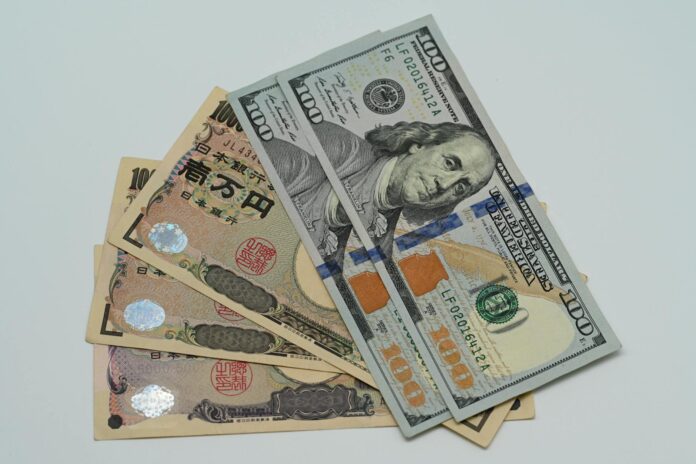
USD/JPY is trading around 153, caught between two opposing forces. The yen rallied nearly 3% last week — its strongest weekly performance since November 2024 — on expectations that the BOJ will raise rates at its April meeting, after former board member Saiji Adachi said on Monday the central bank has accumulated sufficient data to justify a move. BOJ Governor Kazuo Ueda met Takaichi on Monday and reported no specific requests to delay normalisation, easing fears that the prime minister would obstruct the tightening cycle.
But the yen weakened past 153 on Monday after Q4 2025 GDP came in at just 0.1% quarter-on-quarter, rebounding from a 0.7% contraction in Q3 but badly missing the 0.4% consensus forecast. Consumer spending — the largest GDP component — rose only 0.1%, reflecting household stress from persistent inflation that has remained at or above 2% for over three years. Takaichi is simultaneously spending to fight a cost-of-living crisis while pursuing policies that some economists argue fuel the very inflation she claims to be tackling.
Record Budget, Rising Yields
The supplementary budget of ¥18.3 trillion — with ¥11.7 trillion financed through new bond issuance — sits on top of a record initial FY2026 budget of ¥122.3 trillion ($786 billion), the largest in Japanese history. That budget includes ¥29.6 trillion in new government bonds, ¥83.7 trillion in projected tax revenue, and a record ¥9 trillion for defence spending, anchored by the SHIELD coastal defence system aimed at countering a potential Chinese invasion.
The Finance Ministry has set its provisional interest rate for debt-servicing calculations at 3% — the highest since 1997 — a tacit acknowledgement that the era of negligible borrowing costs is over. Debt-servicing costs are projected to reach ¥31.3 trillion in FY2026, rising to ¥40.3 trillion by FY2029, consuming roughly 30% of total expenditure. Total government debt stood at ¥1,341.7 trillion ($9 trillion) as of October 2025, representing approximately 240–250% of GDP — the highest ratio of any advanced economy.
The Reuters Bombshell
The most consequential data point landed on Monday. A Reuters exclusive revealed Finance Ministry estimates showing annual bond issuance will surge 28% to approximately ¥38 trillion by fiscal 2029, up from ¥29.6 trillion in FY2026, as rising social welfare costs for an ageing population and ballooning interest payments outstrip tax revenue growth. The projection directly contradicts Takaichi’s repeated assertions that Japan can deliver tax cuts — including the elimination of the provisional gasoline tax (¥1 trillion in revenue foregone) and expansion of the income tax-free threshold — without increasing debt issuance.
The estimate assumed nominal growth of 1.5% and 10-year JGB yields at 3%. Under a more optimistic scenario of 3% nominal growth, debt-servicing costs would still hit ¥41.3 trillion by FY2029. Either way, the fiscal trajectory tightens the BOJ’s room to normalise without triggering a self-reinforcing cycle of higher yields, higher servicing costs and wider deficits.
Liz Truss Comparisons
Some market observers have drawn parallels to the UK’s 2022 gilt market crisis under Liz Truss. Takahide Kiuchi, executive economist at Nomura Research Institute, warned before the budget that a figure of ¥125 trillion or above would cause “turmoil in the bond market, already in crisis mode, to deepen further.” The final ¥122.3 trillion stayed below that threshold, but Kiuchi noted the supplementary budget “quickly ballooned” under Takaichi, adding that financial markets remain on high alert for a repeat.
Takaichi has rejected what she calls “irresponsible bond issuance” in a Nikkei interview, while Finance Minister Satsuki Katayama separately admitted there could be a short-term worsening of fiscal health to drive future growth. The dual messaging — discipline for markets, spending for voters — echoes the strategic ambiguity that preceded the Truss gilt crisis, though Japan retains structural advantages including a domestically held debt base and a current account surplus.
What Forex Traders Are Watching
The immediate USD/JPY catalyst is the April BOJ meeting. A rate hike would support the yen, but rising JGB yields simultaneously increase Japan’s debt-servicing burden, potentially forcing the government to issue even more bonds — a dynamic that could reverse yen strength if markets begin pricing in fiscal unsustainability. The 52-week USD/JPY range of 139.88 to 159.46 reflects this uncertainty. Traders who were short the yen on Takaichi’s election have partially unwound positions, but the Reuters debt projection suggests the structural bear case for Japanese fiscal credibility is only beginning to build.
Sources: Asiatimes