


Reading time: 4 min
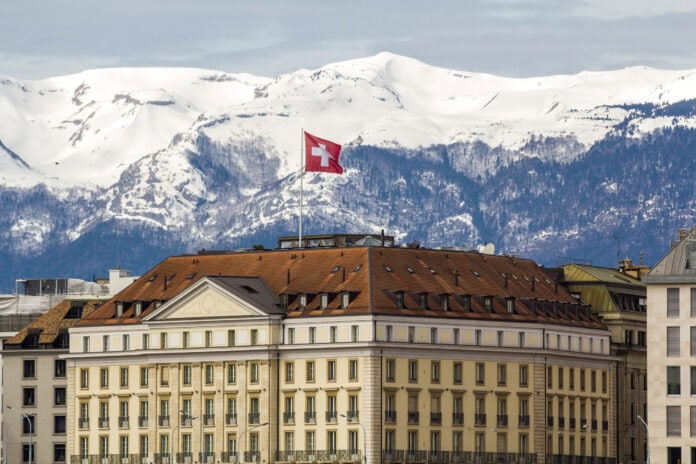
Crude fell roughly 2% on Thursday morning as the third round of US-Iran nuclear talks opened in Geneva — a session widely viewed as a last chance for diplomacy before the White House follows through on threats of military action that could reshape Middle East supply flows within days.
The Geneva Table
US special envoy Steve Witkoff and adviser Jared Kushner sat down with Iranian Foreign Minister Abbas Araghchi in indirect talks mediated by Oman’s Badr Al Busaidi. By midday, Tehran’s delegation reported that “important” and “practical” proposals had been exchanged on Iran’s nuclear programme and the lifting of sanctions. Talks broke and were set to resume around 17:00 GMT. Araghchi said earlier this week that a deal was “within reach, but only if diplomacy is given priority.” The administration’s language has been less patient. White House press secretary Karoline Leavitt said Wednesday there were “many reasons and arguments that one could make for a strike against Iran.”
The backdrop is anything but diplomatic. US air and naval assets have massed across the Middle East. Iran responded by partially closing the Strait of Hormuz on February 16, citing “security precautions,” and launched IRGC naval drills alongside joint exercises with Russia in the Sea of Oman. About 13 million barrels per day of crude transited the Strait of Hormuz in 2025 — roughly 31% of global seaborne crude flows, according to Kpler. If that chokepoint narrows further, nothing else on the supply side matters.
The $10 Question
As of early Thursday, WTI traded at $64.38, down 1.6%, while Brent slipped 1.3% to just below $70 — pulling back from the six-month high of $71 hit last week. Oil futures are up roughly 15% year-to-date, almost entirely on Iran-related supply risk. Vandana Hari of Vanda Insights estimated Brent currently carries approximately $10 per barrel in geopolitical risk premium. SEB analyst Ole Hvalbye was blunt: without the escalation, Brent would probably trade between $60 and $65.
That premium is now binary. A deal — or credible progress toward one — would deflate the risk bid rapidly, potentially sending Brent back toward the mid-$60s. A collapse in talks, followed by military action the White House has signalled could come as early as this weekend, would spike prices in the opposite direction, with the Strait of Hormuz as the immediate flashpoint.
Why the Inventory Build Didn’t Help
Normally, a 16-million-barrel surge in US crude inventories — the largest weekly build since February 2023, reported by the EIA on Wednesday — would weigh heavily on prices. It barely registered. The build was attributed to weather-related production freeze-offs in prior weeks snapping back, distorting the headline number. The fact that a double-digit inventory build couldn’t push crude below $64 tells you where the market’s centre of gravity is. Geopolitics is the only trade.
The Supply Side Is Already Moving
Saudi Arabia has quietly begun boosting production and exports as a contingency in case a US strike disrupts regional supplies, according to Reuters. OPEC+ is separately expected to consider raising output by 137,000 barrels per day for April — ending a three-month pause in production hikes. Iran is OPEC’s third-largest producer. An extended conflict could take Iranian barrels off the market entirely, but the more immediate risk is the Strait — and no amount of Saudi spare capacity compensates for a chokepoint handling nearly a third of global seaborne crude.
Goldman Sachs has modelled both outcomes. In the base case, elevated geopolitical premium supports Brent near current levels through mid-year. In the downside case — sanctions relief granted to Iran, and potentially Russia — additional supply could trim $5 to $8 from Q4 2026 projections. The asymmetry is notable: the bull case has no obvious ceiling, while the bear case has a floor around $60 set by non-OPEC supply growth that was already outpacing demand before Iran became the dominant variable.
What Tehran Is Dealing With
Iran’s negotiating position is weaker than at any point since the original JCPOA talks. Operation Midnight Hammer — the June 2025 US stealth bomber strike on three nuclear facilities — left the programme in ruins. Domestically, student protests swept Tehran for a second day on Wednesday following last month’s crackdown. President Pezeshkian posted on X that Iran was “committed to peace” but had “made all necessary preparations for any potential scenario.” Trump used Tuesday’s State of the Union to say he would not allow “the world’s biggest sponsor of terrorism” to possess nuclear weapons.
What Breaks the Stalemate
The core impasse hasn’t changed. Washington demands Iran cannot enrich uranium; Tehran insists enrichment is a sovereign right. Most analysts expect Thursday to produce, at best, a framework for further talks. For traders, the positioning is straightforward but uncomfortable. Long crude is a bet on diplomacy failing. Short crude is a bet on a deal that even the participants seem to view as unlikely. The middle ground — holding and waiting — is what most of the market appears to be doing, which explains why volatility has compressed even as headline risk has intensified. That compression won’t last. Geneva will produce a signal, and the $10 of premium currently embedded in every barrel of Brent will either justify itself or evaporate. There is no scenario in which it stays exactly where it is.
Sources: CNBC, OilPrice, Bloomberg, Al Jazeera, NPR