


Reading time: 8 min
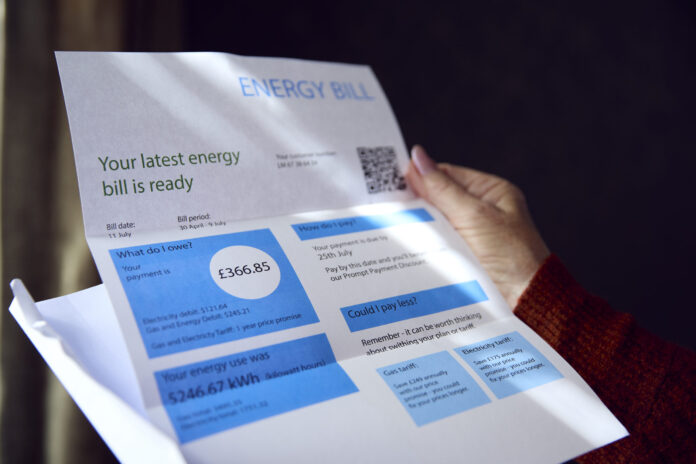
Ofgem has cut the energy price cap 7% to £1,641 a year for typical dual-fuel households from April 1, driven almost entirely by the government’s decision to shift green levies from electricity bills into general taxation. The £117 annual saving is real, but it arrives with a caveat that rarely makes the headline: UK energy bills remain 35% above their pre-crisis levels, European gas storage is at its lowest point since the months before Russia invaded Ukraine, and the wholesale market dynamics that could push prices back up have not gone away.
What Actually Changed
The reduction is not primarily a market story. The net £117 saving is the result of several moving parts: Chancellor Rachel Reeves’ November 2025 Budget removed around £134 in policy costs from typical dual-fuel direct debit bills, while wholesale energy costs fell by a further £38 and other supplier costs dropped £15. Working against these reductions, network costs rose £66 — primarily due to the RIIO-3 price control framework funding grid upgrades. The Budget measures were the dominant factor: the government will fund 75% of the legacy Renewables Obligation for three years, shifting the cost into general taxation. It also scrapped the Energy Company Obligation scheme entirely when it expires in April. Energy UK notes that the government’s headline figure of £150 in savings reflects an average across all electricity-bill-paying households, while the £134 figure applies specifically to typical dual-fuel direct debit customers.
Ofgem’s Tim Jarvis confirmed that the policy cost changes are the main driver, with wholesale price movements a secondary factor. Unit rates for electricity will fall 11%, gas unit rates 3%, and gas standing charges will drop 17%, though electricity standing charges will rise 4% due to network upgrade costs being added to the cap.
Still Expensive by Any Measure
Context matters more than the headline. The House of Commons Library published updated figures this week showing that even after the April cut, typical energy bills under the price cap will be 35% higher than in winter 2021/22 — the last period before Russia’s full-scale invasion of Ukraine sent global energy markets into crisis. The price cap hit £3,549 in October 2022 before the government’s Energy Price Guarantee capped actual payments at £2,500. Bills have come down substantially since that peak, but the journey back to pre-crisis levels is nowhere near complete.
The trajectory through 2025 was volatile. The cap rose to £1,849 in Q2 2025, fell to £1,720 in Q3, climbed to £1,755 in Q4, and edged up again to £1,758 in Q1 2026. Cornwall Insight expects the cap to remain broadly stable through the rest of 2026, with a small further fall forecast for July. But those projections carry significant uncertainty because they depend on wholesale prices that remain sensitive to geopolitics, weather, and infrastructure constraints. When adjusted for inflation, the gap to pre-crisis levels is narrower — Ofgem notes the new cap is 12.3% below the same period in 2025 in real terms — but bills are still significantly higher than they were before the energy crisis began.
Europe’s Storage Problem
The UK does not set energy prices in isolation. British wholesale gas costs track the Dutch TTF benchmark, which closed the last week of February around €31–32 per megawatt-hour — down more than 40% from a year ago but still roughly double pre-crisis levels, as the International Energy Agency noted in its latest commentary. The drop from 2025 peaks reflects a combination of milder-than-feared late winter temperatures, record US LNG exports reaching 111 million tonnes in 2025, and weak European industrial demand suppressing consumption.
But the supply picture is tightening beneath the surface. EU gas storage fell below the 40% capacity threshold in February — the lowest level since winter 2021/22, when Russia was actively restricting exports in the months before invasion. Germany’s storage stands at 30.2%, France at 29%, the Netherlands at just 23.5%. The EU is projected to exit winter with inventories around 26% full, well below the 52% recorded at the same point in 2025. The expiry of the Russian gas transit contract through Ukraine on January 1, 2025, permanently removed one of the last remaining pipeline routes for Russian gas into Europe — a country that once supplied 40% of the continent’s gas. Weak wind generation across northwest Europe in early 2026 further increased reliance on gas-fired power, accelerating storage drawdowns.
These dynamics create a demanding summer refill season. The EU’s binding target requires member states to reach 90% storage capacity before November, though regulatory flexibility introduced in September 2025 allows this deadline to shift to as late as December. Kpler forecasts that if new LNG supply from the Atlantic basin arrives as expected, EU storage could reach 96% by November — but that requires injection volumes significantly above recent averages. ABN AMRO expects TTF to average €30/MWh across 2026, with summer prices potentially falling to €26 as new US and Qatari LNG capacity comes online. The IEA is less sanguine, noting that global gas markets are unlikely to ease meaningfully until well into 2026 when a wave of new LNG projects start hitting international markets.
The UK in European Context
Britain’s position within the European energy landscape is paradoxical. UK domestic gas prices were below those in 17 EU countries in the first half of 2025, sitting 28% below the EU average according to House of Commons Library data. But UK electricity prices were higher than in every EU state except Germany. The ratio of electricity to gas unit prices in the UK was the highest in any European country — a structural distortion that the government’s Budget intervention partially addresses by shifting renewable energy levies off electricity bills specifically.
The electricity-gas price gap matters because it affects the economics of decarbonisation. Heat pumps, electric vehicles, and other electrification technologies compete against gas on price. When electricity costs four to five times more than gas per unit of energy, the financial case for switching weakens. The Budget measures narrow that gap for three years, but the Renewables Obligation funding reverts to bills in 2029 unless extended — creating what the Resolution Foundation calls a “difficult choice” for ministers potentially just ahead of a general election. The Foundation estimates that changes in network costs, policy costs, and wholesale prices will add around £60 back onto bills by 2029, gradually eroding the discount.
For European industrial consumers, the picture is bleaker. Gas prices for industry across the continent have averaged 30% higher than in China and five times higher than in the United States since 2022. Several energy-intensive manufacturers have curtailed production or closed entirely. The European Commission’s forthcoming Energy Security framework is expected to address storage requirements, import diversification, and measures to accelerate domestic energy production — but new LNG export capacity from the US, Canada, and Qatar, which will increase global supply by nearly 50% by 2030, remains the most significant structural relief on the horizon.
Switching and What Consumers Can Actually Do
Around 60% of UK customers remain on default tariffs governed by the price cap. The other 40% are on fixed or tracker deals — and this is where the immediate savings opportunity lies. EDF’s tracker tariff guarantees a £100 annual saving against the cap, and several suppliers are offering fixed deals below the new April level. Ofgem data shows switching rates have increased nearly 20% year-on-year, and suppliers are offering a wider range of products including time-of-use tariffs with cheaper off-peak rates. Prepayment customers, who have a separate and lower cap, will see their annual cost fall from £1,711 to £1,597 — the cheapest payment method, saving around £47 on average versus direct debit.
The End Fuel Poverty Coalition warned, however, that some fixed tariffs may not immediately incorporate the April policy cost changes, making the switching calculation temporarily harder to evaluate. Their advice: wait for the new rates to settle before committing to a fixed deal, particularly given Cornwall Insight’s expectation that the cap will remain broadly flat through 2026. For households on the lowest incomes, the Warm Home Discount — expanded from October 2025 to cover an additional 2.7 million households, bringing the total to around six million — provides £150 off bills, and the Resolution Foundation’s analysis shows the Budget savings are worth roughly twice as much to the poorest households as a share of total spending.
The Structural Question
The April price cap cut is genuine relief. It is also, in structural terms, a fiscal transfer — the government is borrowing to subsidise energy bills rather than addressing the underlying cost drivers. Wholesale gas prices remain elevated because Europe permanently lost its cheapest supply source in 2022 and is now competing globally for LNG cargoes. Network upgrade costs are rising as the grid is rewired for renewables. Standing charges — the fixed daily cost of being connected — jumped 42% in April 2022 and remain a burden on low-usage households despite Ofgem’s plans for a low-standing-charge tariff pilot this spring.
The government’s stated strategy is that building more domestic clean energy capacity will eventually break the link between global gas prices and UK electricity costs. Offshore wind generated more power than domestic gas for the first time in 2024, and analysis from the Energy and Climate Intelligence Unit found that renewables growth is already cutting electricity prices by up to a quarter. But “eventually” does a lot of work in that sentence. For now, UK energy bills are falling because the Treasury is writing cheques — and those cheques have an expiry date of 2029. What happens after that depends on whether the infrastructure investments being made today deliver the cheaper, more stable energy system they promise. The April cut buys time. It does not solve the problem.
Sources: Ofgem, House of Commons Library, GOV.UK, Energy UK, IEA