


Reading time: 5 min
Qatar plans to more than double its liquefied natural gas output to 160 million tonnes per annum as five of the world’s most powerful energy CEOs used LNG2026 in Doha to present a united front against European Union supply chain rules. With the EU’s own share of Qatari LNG already shrinking to just 6% and a Russian import ban looming from 2027, Brussels faces the prospect of losing access to the very supplies it will need most — at the precise moment it has least leverage to demand them.
The 160-Million-Tonne Bet
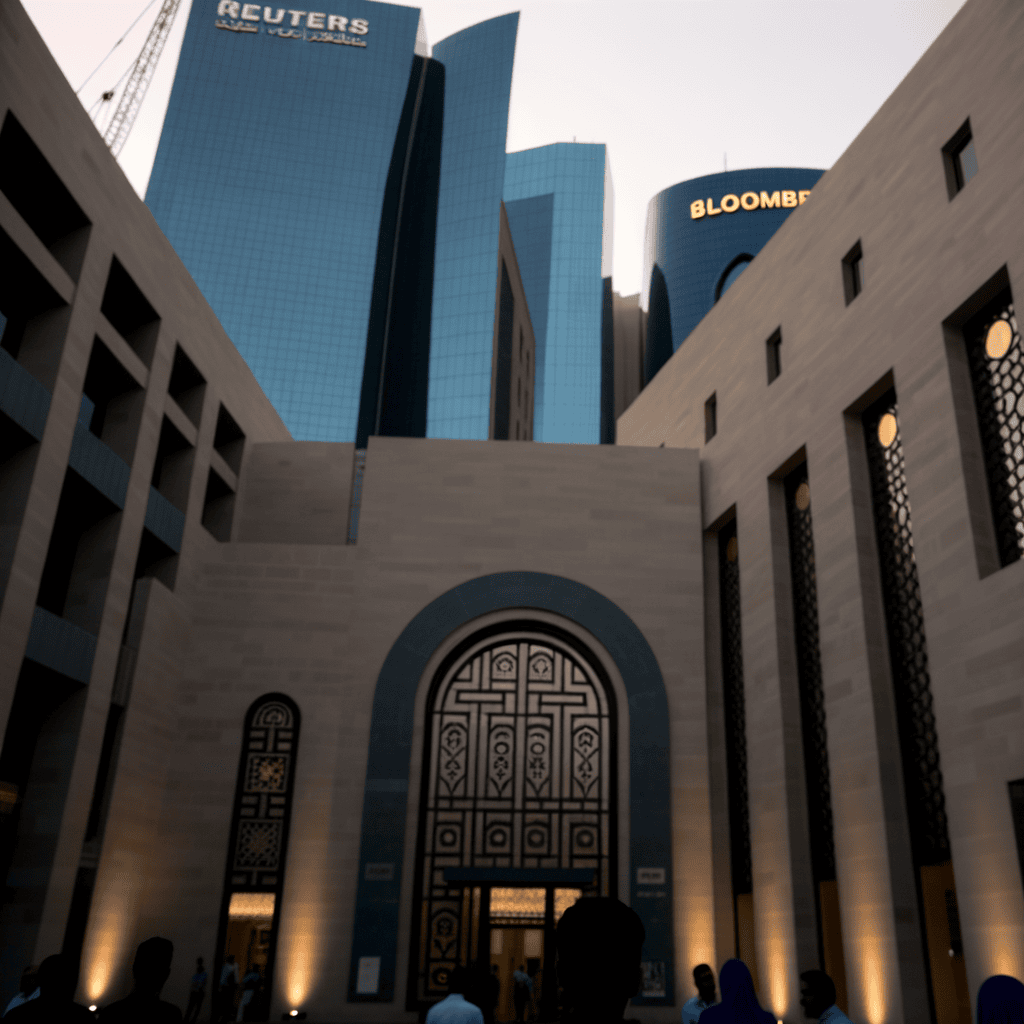
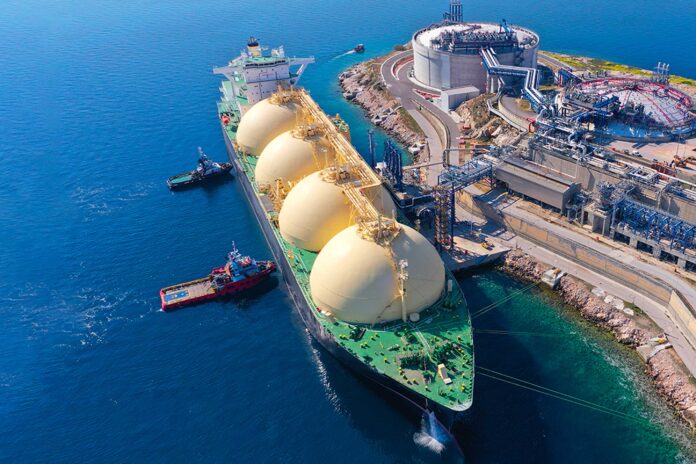
QatarEnergy CEO and Energy Minister Saad Sherida Al-Kaabi opened LNG2026 — held 2–5 February at the Qatar National Convention Centre — with a production target that dwarfs any single expansion in LNG history. Qatar’s North Field East project, with 32 million tonnes of annual capacity across four mega-trains, will begin commissioning its first train by mid-2026 (Gulf Times, 22 May 2025). North Field South adds a further 16 million tonnes by 2027–2028, and North Field West — announced in February 2024 after appraisal drilling confirmed 240 trillion cubic feet of additional reserves — contributes another 16 million tonnes before the end of the decade, bringing domestic capacity to 142 million tonnes (QatarEnergy). Including the three-train Golden Pass facility in Texas, a joint venture with ExxonMobil approaching commissioning, QatarEnergy’s total output reaches 160 million tonnes — making it the largest single LNG exporter by company, while Qatar as a country sits behind only the United States (Gulf Times).
The conference underscored where that gas is heading. Shell CEO Wael Sawan projected global LNG demand rising to 650–700 million tonnes by 2040, from roughly 415 million tonnes today, driven by what he described as the world adding the energy equivalent of Switzerland every month through to 2050 (Reuters, 2 February 2026). ConocoPhillips CEO Ryan Lance forecast demand doubling within 20 years to 800 million tonnes by 2050. Al-Kaabi was more pointed: growing electricity demand from AI and data centres, combined with rising Asian consumption and European needs, could convert the anticipated mid-decade supply glut into a shortage by 2030 (Reuters).
Asia Takes the Volume, Europe Gets the Leftovers
The demand picture painted at LNG2026 was overwhelmingly Asian. India plans to raise gas from 6–7% to 15% of its energy mix by 2030. Japan and South Korea cited data centre expansion as a primary driver of rising requirements. China and India’s LNG-fuelled trucking sectors have surged over the past two to three years. Al-Kaabi flagged Bangladesh, Sri Lanka, the Philippines and Vietnam as markets where future demand will be enormous (Reuters). On the sidelines, QatarEnergy signed a landmark 27-year sales and purchase agreement with JERA, Japan’s largest power generator, for up to 3 million tonnes annually — the kind of ultra-long-term commitment Europe has struggled to secure (Doha News, 6 February 2026).
The EU’s position is weakening in real time. Eurostat data for Q3 2025 show Qatar supplying just 6% of EU LNG imports, down from roughly 14% in 2024. The United States now accounts for 59.9% of EU LNG. Qatar’s own Euronews interview at LNG2026 quoted Sawan noting European gas storage levels sitting at around 40%, compared with a five-year average of 65% — a vulnerability that will sharpen further when the EU’s ban on Russian LNG imports takes effect from January 2027 under sanctions adopted in October 2025 (European Commission, Q2 2025 Gas Market Report).
The CSDDD Standoff — and Brussels’ Retreat
The Corporate Sustainability Due Diligence Directive, adopted in June 2024, requires large companies operating in the EU to identify and address human rights and environmental impacts across their supply chains. For Qatar — where migrant labour conditions in the energy sector remain under international scrutiny — the directive’s extraterritorial reach and original penalty of up to 5% of global turnover represented an existential compliance burden.
Al-Kaabi escalated through 2025 with escalating clarity. At ADIPEC in October, he stated Qatar would halt LNG deliveries to Europe if the directive remained unchanged. In the same month, he co-signed an open letter with US Energy Secretary Chris Wright to every EU head of state, calling the directive an existential threat to energy partnerships and demanding its repeal or the removal of key provisions including extraterritorial application, climate transition plans and civil liability (US Department of Energy, October 2025). Forty-six European CEOs separately called for the same.
Brussels blinked. The Omnibus I package, provisionally agreed by the European Parliament and Council on 9 December 2025 and approved by Parliament on 16 December, gutted the directive. The scope threshold was raised from 1,000 to 5,000 employees with €1.5 billion in turnover. The mandatory climate transition plan was deleted entirely. EU-wide civil liability was removed. Penalties were capped at 3% of turnover. Implementation was deferred to July 2029 — five years after adoption (Council of the EU, 9 December 2025). Yet Al-Kaabi and Wright’s letter described even the Omnibus as falling “grossly short” of addressing their concerns (ESG Today).
The Next Regulatory Front
Largely absent from the LNG2026 headlines — but arguably more consequential — is the EU’s Methane Emissions Regulation (2024/1787), which entered force in August 2024. From January 2027, all new LNG import contracts must demonstrate that producers apply monitoring, reporting and verification standards equivalent to the EU’s own. From August 2028, importers must report the methane intensity of their cargoes. And from August 2030, imports under new or renewed contracts must fall below a maximum methane intensity threshold to be set by the European Commission — effectively creating a technical barrier that could block non-compliant cargoes from the EU market entirely (Norton Rose Fulbright; EUR-Lex 2024/1787).
Al-Kaabi has addressed both regulations in tandem, and Qatar’s position is unambiguous: it has no plans to achieve net zero in the near future. For European buyers already locked into long-term contracts with Shell, TotalEnergies and ENI — typically 27-year agreements with prices indexed to crude — the regulatory uncertainty adds compliance risk on top of supply risk. The IEA has suggested Europe should replace Russian LNG with Qatari supplies from 2027, but the diplomatic groundwork for that pivot is moving in the opposite direction.
The structural picture is clear. Qatar’s expansion is not aimed at Europe. Asia’s appetite, AI-driven power demand and the sheer scale of emerging market energy needs give QatarEnergy the luxury of choosing its customers. Europe, having burned its bridge with Russia and antagonised its alternative supplier with extraterritorial regulation, now faces a market in which it must compete for every cargo — from a position of declining relevance and dwindling storage reserves.
Sources: Euronews