Reading time: 4 min
A record-breaking January spike, a 40% rally in 2025, and a structural deficit that no amount of M&A can fix fast enough. Copper’s supercycle thesis is being tested in real time — and the miners posting blowout earnings still cannot dig the metal out quickly enough.
The January Blow-Off and What Came After
LME copper three-month forwards hit an all-time high of $14,527.50 per metric ton on January 29, surging as much as 11% intraday on speculative buying led by Chinese investors, according to Bloomberg. COMEX futures peaked at $6.5830 per pound the same session. The move capped a 2025 in which LME copper rose over 41%. By early February, the metal had retreated below $13,000, leaving the market split between Western bulls — LME net longs in their 80th percentile — and Chinese bears running the widest SHFE net short since 2021, as StoneX analyst Natalie Scott-Gray noted in a January briefing to S&P Global Platts.
The demand picture is layered: the energy transition, defence spending, and AI data centre buildout are all copper-intensive. But the immediate catalyst was Trump-era tariff policy — American importers rushing to pre-position metal ahead of potential duties tightened physical availability outside the US. Goldman Sachs sees LME copper surpassing $15,000 by 2035, though it warned of near-term consolidation. StoneX’s 2026 forecast is more conservative at $11,490 per ton average.
Earnings Season: Copper Pays, Everything Else Drags
BHP’s half-year results for the period ending December 2025 delivered the starkest proof of copper’s dominance. Net profit jumped 22% year-on-year to $6.2 billion, with the copper segment accounting for more than half of group EBITDA at $8 billion — a 59% increase — driven by record output at Escondida and the integration of OZ Minerals. BHP also closed the largest silver streaming deal in its history, a $4.3 billion agreement with Wheaton Precious Metals.
Glencore reported full-year adjusted EBITDA of $13.51 billion, down 6% as weaker coal prices offset metals strength, but H2 core profit surged 49% on the back of higher copper volumes. CEO Gary Nagle outlined plans to lift output beyond one million tonnes annualised by end-2028 and target roughly 1.6 million tonnes by 2035, partly through a newly finalised land-access deal with Gécamines for the KCC mine in the DRC. Teck Resources, meanwhile, cited record copper prices as the primary driver of its profit improvement and remains in merger discussions with Anglo American aimed at creating a dedicated copper major.
KGHM: Poland’s Copper Giant Rides the Wave — With Caveats
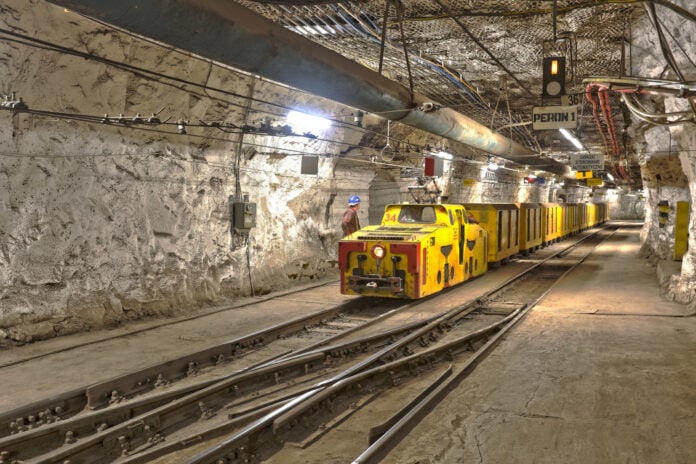
KGHM Polska Miedź, the world’s largest silver producer and a top-ten copper miner, has been a direct beneficiary of the rally but faces a more complex earnings story. Through the first nine months of 2025, the group reported EBITDA of PLN 7.2 billion, up 16% year-on-year, on revenues of PLN 25.9 billion. Payable copper production of 526,000 tonnes was in line with budget targets. The Chilean joint-venture mine Sierra Gorda delivered an even stronger result: its adjusted core profit surged 60% to $970 million over the same period, driven by higher copper and molybdenum volumes, as reported by Mining.com.
KGHM shares hit a 52-week high of PLN 212.50 in late November, capping an 81.6% annual gain, but have since corrected amid management upheaval and copper price volatility. A significant tailwind arrives in 2026: Poland’s government announced a reduction in the copper mining tax, paid exclusively by KGHM, which should lower C1 cash costs. The company is also investing PLN 3.8 billion in new shaft infrastructure and smelter upgrades, positioning for long-term production stability in its ageing Lower Silesia ore body. KGHM remains a high-beta play on copper and silver, with upside tied to the accelerating global demand for conductive metals driven by semiconductor and data centre expansion.
The Supply Bottleneck That Money Cannot Fix
The IEA estimates it takes an average of 16 years to bring a new copper mine from discovery to first production. Benjamin Louvet, commodities director at Ofi Invest AM, told AFP that the industry underestimated the electrical dimension of the energy transition. He argued copper would need to sustain $15,000 per tonne before miners committed to genuinely new greenfield projects, given the cost and permitting risk. Capital scarcity compounds the problem: long-cycle mining investments compete poorly against faster-return alternatives, pushing the industry toward consolidation as the preferred route to growth. Glencore’s failed mega-merger approach to Rio Tinto in early February — a deal that would have created a $240 billion group — illustrates both the appetite and the difficulty. The broader pressure on industrial metals producers from tariffs and shifting trade flows only adds to the uncertainty facing boards weighing multi-billion-dollar, decade-long development commitments.
Strategic stockpiling offers no shortcut. Even if the US and allied nations accelerated reserve-building, Louvet estimates such buffers would cover roughly 60 days of global consumption — a rounding error against annual demand of approximately 28 million tonnes. The structural challenge remains: new mines are approved only when shortages are already acute, guaranteeing price spikes followed by years of undersupply.