

Reading time: 6 min
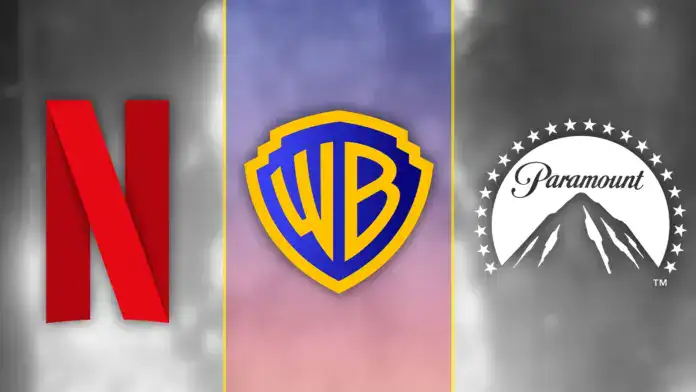
The streaming giant dropped its $82.7 billion bid for Warner Bros. Discovery in under two hours, ceding Hollywood’s biggest studio to Paramount Skydance’s $111 billion offer. Netflix stock jumped 14% on Friday. Paramount surged 21%. One of them made the right call, and the market has a strong opinion about which.
Ted Sarandos was still inside the White House when the news broke. The Netflix co-CEO had spent Thursday morning lobbying administration officials on the merits of his company’s Warner Bros. deal. Meetings with staff, including Attorney General Pam Bondi. Pointedly not with the president. Then, just after lunch, Warner Bros. Discovery’s board formally declared Paramount Skydance’s latest bid a “superior proposal.” Netflix had four business days to counter. It took less than two hours to say no.
“This transaction was always a ‘nice to have’ at the right price, not a ‘must have’ at any price,” Sarandos and co-CEO Greg Peters wrote in a joint statement on February 26. That single sentence did more for Netflix’s share price than any earnings beat. NFLX closed Friday at $96.24, up 13.8% from Thursday’s $84.59, clawing back roughly two thirds of the 18% decline it suffered since first announcing its Warner Bros. interest on December 5.
The Arithmetic That Killed the Deal
Here is what investors didn’t want Netflix to do: match $31 per share for the entirety of Warner Bros. Discovery. Netflix’s original December agreement was structured differently. It offered $27.75 per share for just the studios and streaming assets, a cleaner slice that excluded the declining cable television business. Total enterprise value: roughly $82.7 billion. Paramount’s counter went after everything. HBO, CNN, TNT, Discovery Channel, the international portfolio including Poland’s TVN group, and approximately $33 billion in legacy debt. All for $111 billion.
The financing alone should give shareholders pause. According to Bloomberg, Paramount secured $57.5 billion in debt commitments from Bank of America, Citigroup, and Apollo Global Management, backstopped by a $45.7 billion personal equity guarantee from Larry Ellison, the Oracle co-founder and father of Paramount CEO David Ellison.
Ben Barringer, head of technology research at London’s Quilter Cheviot, told CNBC the walkaway was a “tick in the box” for management discipline. HSBC analysts were blunter, describing Paramount’s victory as leaving the company “saddled with sizable deal debts.” Ross Benes, senior analyst at Emarketer, didn’t mince words either: the deal, he said, is “more about Ellison taking over Hollywood and ego than it is about good business sense.”
What Paramount Actually Bought
On paper, the combined entity looks formidable. Warner Bros. Discovery reported $37.3 billion in revenue for 2025, down 5% year-on-year per its fourth-quarter filing, and 132 million streaming subscribers across HBO Max and Discovery+. Paramount itself operates CBS, MTV, Paramount+, and the film studio behind franchises like Mission: Impossible and Transformers. Together they would rival Disney and Comcast’s NBCUniversal in sheer scale.
But scale isn’t the same as health. WBD only just returned to profitability last year, posting a $727 million net profit after booking an $11.3 billion loss in 2024, largely from asset writedowns. The cable business, the part Netflix specifically didn’t want, continues to shrink. Paramount itself posted a net loss in Q4 2025. The combined company’s first order of business will be servicing an enormous debt stack while attempting to integrate two studios that have never shared a back lot.
Paramount projects over $6 billion in synergies, mostly from technology consolidation and corporate overhead cuts. If that figure sounds ambitious, it’s because Wall Street has been rewarding companies that slash costs and call it transformation. Block’s recent 4,000-job cut under the banner of AI sent its stock soaring. But the track record for mega-mergers delivering on promised synergies is, to put it charitably, mixed. AT&T bought Time Warner in 2018 for $85 billion. Four years later it spun the whole thing off at roughly half that implied value, creating the very entity now being sold again. Warner Bros. Discovery is about to go through its third major ownership change in under a decade.
The Political Wiring
There’s no separating this deal from Washington. David Ellison attended Trump’s State of the Union address as a guest of Senator Lindsey Graham, the two men grinning with thumbs up in a photo posted to Graham’s X account. Paramount hired Makan Delrahim, Trump’s former antitrust chief, to quarterback its regulatory strategy. The Ellison family consortium also holds a stake in TikTok’s restructured U.S. operations. Former FTC commissioner Alvaro Bedoya put it plainly on X: “One family is about to control CBS, CNN, HBO, and TikTok.”
Democrats have taken notice. Senator Elizabeth Warren labeled the transaction an “antitrust disaster.” California Attorney General Rob Bonta vowed a “vigorous” investigation, noting that “these two Hollywood titans have not cleared regulatory scrutiny.” Senator Cory Booker, the ranking Democrat on the Senate Judiciary antitrust subcommittee, invited Ellison to testify at a hearing originally scheduled for March 4. WBD shareholders are set to vote on the merger on March 20, but federal, state, and European regulatory clearances could stretch the timeline well into the second half of 2026.
The irony isn’t subtle. Netflix, which drew bipartisan scrutiny over monopoly fears during the Sarandos hearing (Republicans attacked it over “woke” programming, Democrats worried about market concentration), got outmaneuvered by a company whose political connections run directly into the Oval Office. As one Deadline analysis noted, Paramount had a “360-degree approach” covering financial, regulatory, and political angles simultaneously. Netflix had a spreadsheet and discipline. This time, the spreadsheet won.
What Netflix Gets Instead
The $2.8 billion breakup fee, which Paramount paid Netflix directly per an SEC filing on February 28, is a nice consolation prize. But the real windfall is structural. Netflix exits the saga with no integration risk, no legacy cable assets dragging on margins, no $33 billion in inherited debt, and no regulatory gauntlet to run. Its 2025 results tell the story: $45.2 billion in revenue, a 29.5% operating margin (up from 26.7% a year earlier), $11 billion in net income, and 325 million paying subscribers approaching a billion total viewers, according to its Q4 2025 earnings report filed January 20. The company projects $51 billion in revenue for 2026 with margins still expanding. Paramount cannot touch those numbers.
Dan Coatsworth, head of markets at AJ Bell, characterized Paramount as “the streaming market laggard” that needs Warner’s content to compete, adding that “it will need more than Harry Potter for the deal to work its magic.” That framing captures the asymmetry neatly. Paramount needs this deal. Netflix walked away from it. In the broader context of media industry consolidation, where outlets are cutting staff and scrambling for scale, the fact that the market’s dominant player chose restraint over expansion speaks louder than any press release.
Somewhere in Burbank, the integration planning documents are already printing. Paramount expects to close by the third quarter of 2026. Between now and then, every scriptwriter, ad buyer, and cable-TV executive inside both companies gets to live with the uncertainty. Netflix, meanwhile, ships another season of whatever it wants. It doesn’t need anyone’s permission.