


Reading time: 6 min
The EU finalized a legally binding ban on Russian LNG imports five weeks ago. Now QatarEnergy’s production is offline, the Strait of Hormuz is effectively shut, European gas storage sits at multi-year lows, and the continent that congratulated itself on energy independence is scrambling for molecules it voluntarily chose to stop buying.
There is no polite way to say this. Europe built a post-Russia energy architecture that depends almost entirely on seaborne LNG arriving through two maritime corridors: the Atlantic route from the United States and the Persian Gulf route from Qatar. One of those corridors just collapsed. The other was never designed to carry the full load alone. And the safety net that Russian pipeline gas once provided, however politically toxic, no longer exists because Brussels legislated it out of existence on January 26, five weeks before Iranian drones hit Ras Laffan.
The Numbers Behind the Squeeze
Start with storage. According to Bruegel, the Brussels-based economic think tank, European Union gas inventories stood at just 46 billion cubic metres at the end of February 2026. That compares with 60 bcm at the same point in 2025 and 77 bcm in 2024. Germany’s facilities were 20.5% full as of Saturday. France’s stood at 21%, per Gas Infrastructure Europe data cited by Euronews. These are not comfortable margins heading into a supply crisis. They are among the lowest pre-spring levels in years.
Now layer in the disruption. QatarEnergy halted all LNG production on Monday after Iranian drone strikes targeted facilities at Ras Laffan Industrial City and Mesaieed Industrial City. That single decision removed roughly 20% of global LNG export capacity from the market, according to analysis from OilPrice.com. The Dutch TTF benchmark, Europe’s main gas price reference, surged as much as 54% intraday, briefly touching 47 euros per megawatt hour, Bloomberg reported. UK day-ahead gas prices jumped about 40%, climbing to 110 pence per therm, per the Guardian. Brent crude topped $82 a barrel, up 13%, the highest since January 2025.
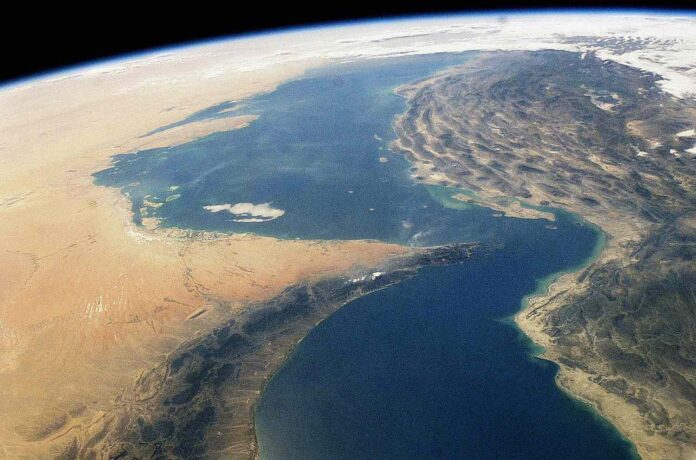
The Strait of Hormuz, through which Qatar’s LNG tankers must pass, is effectively closed. An IRGC commander said on Monday that any vessel attempting transit would be set ablaze. According to Reuters ship-tracking estimates cited by Al Jazeera, at least 150 tankers have dropped anchor in open Gulf waters. Five have already been damaged. Marine insurers including Gard, Skuld, and NorthStandard have announced that war-risk cover will be cancelled from March 5. Hapag-Lloyd halted all vessel transits through the strait. CMA CGM told ships in the Gulf to shelter in place. This is, as one marine war-risk specialist put it, a de facto closure.
The Sanctions Calendar Could Not Have Landed Worse
Here is what makes Europe’s situation structurally different from 2022, when the last energy crisis hit. Four years ago, the problem was that Russia weaponised its pipeline gas deliveries. Europe scrambled, built floating LNG terminals, signed emergency supply contracts with the United States and Qatar, and survived. The experience was supposed to make the continent resilient. Instead it created a new, equally concentrated dependency.
The REPowerEU regulation, published in the Official Journal on February 2, 2026, bans short-term Russian LNG contracts from April 25 and long-term LNG deals from January 1, 2027, with pipeline gas following by September 2027. Russian gas still accounted for an estimated 13% of EU imports in 2025, worth over 15 billion euros annually, according to the European Council’s own assessment. That is not a trivial volume to lose at the same time that Qatar’s output disappears and the Strait of Hormuz is under effective blockade.
The timing is brutal. EU member states were required to submit national diversification plans by March 1, literally two days before the Hormuz crisis erupted. Those plans assumed a functioning global LNG market with growing supply from both the United States and Qatar. They did not model a scenario in which 70% of OPEC’s spare production capacity sits behind the very chokepoint that just shut down. They certainly did not model it happening barely four weeks after the Russian gas phase-out regulation entered into force.
The Double Bind Is Self-Inflicted
Nobody serious argues that weaning Europe off Russian energy was wrong in principle. Moscow did weaponise gas supplies. Gazprom did deliberately underfill EU storage facilities before the 2022 invasion, causing prices to spike eightfold. The political logic of cutting the Kremlin’s revenue was sound. What was not sound was the assumption that global LNG markets would remain permanently stable and abundant while Europe stripped away its fallback options one by one.
In the first half of 2025, EU countries sourced 57% of their LNG imports from the United States, according to IEEFA’s European LNG Tracker. Qatar, Algeria, and other suppliers filled the rest. Russia, despite everything, remained the fourth-largest natural gas supplier to the EU, exporting nearly 38 bcm in 2025, per Bruegel’s calculations. Banning that supply while simultaneously depending on Qatari cargoes that transit a 34-kilometre-wide strait bordered by Iran was always a gamble. It just didn’t look like one until Saturday.
IntelliNews put it bluntly in a Monday analysis: if the suspension of Qatari gas continues, Europe may find it impossible to implement its planned ban on Russian gas imports. The legally agreed timeline prohibits short-term LNG contracts from April 25. That is 53 days away. The continent’s storage is projected to end the heating season below 20%, one of the weakest outcomes in fifteen years. Refilling to the 90% target before next winter was already going to be structurally tight. Now it may be arithmetically impossible without either reversing course on Russian gas, outbidding China and India for every spot LNG cargo on the planet, or both.
What Europe Faces Now
The EU’s gas coordination group is set to convene Wednesday to assess the situation. Maksim Sonin, an energy expert at Stanford, told Al Jazeera he does not expect a repeat of the 2022 crisis. But he also noted that further hits on infrastructure would escalate market pressure rapidly. Andreas Schroeder, head of gas analytics at ICIS, was less optimistic. He wrote that the Dutch TTF front-month contract soaring above 90 euros per megawatt hour seems realistic if direct Qatari LNG exports to Europe are removed. For context, the TTF averaged 47 euros in 2021, the year before it spiked to a peak of 311 euros during the worst of the Russia crisis.
Capital Economics estimates that sustained oil prices at $100 a barrel would add 0.6 to 0.7 percentage points to global inflation. Layer on Qatar’s growing dominance in global LNG supply, the insurance industry pulling war-risk cover from the Gulf, and Asian buyers who are not price-sensitive competing aggressively for every available cargo, and Europe is staring at a cost squeeze that its own policy calendar made worse.
Bruegel’s assessment cuts to the structural point: Europe’s exposure to geopolitical shocks remains rooted in its continued reliance on imported fossil fuels traded on volatile global markets, even though it has shifted dependency from Russia to other suppliers. The continent did not achieve energy independence. It achieved energy rebranding. The molecules still come from far away. They still pass through chokepoints. The only difference is that the chokepoint moved from Yamal pipelines to the Strait of Hormuz, and the political leverage shifted from Moscow to Tehran.
That is the uncomfortable truth European policymakers will have to reckon with this week. The sanctions on Russia were a geopolitical choice. The dependency on Gulf LNG was its unintended consequence. And the Strait of Hormuz just turned that consequence into a crisis.
For a complete timeline of how the Iran war reshaped global markets, see our reference page.