


Reading time: 6 min
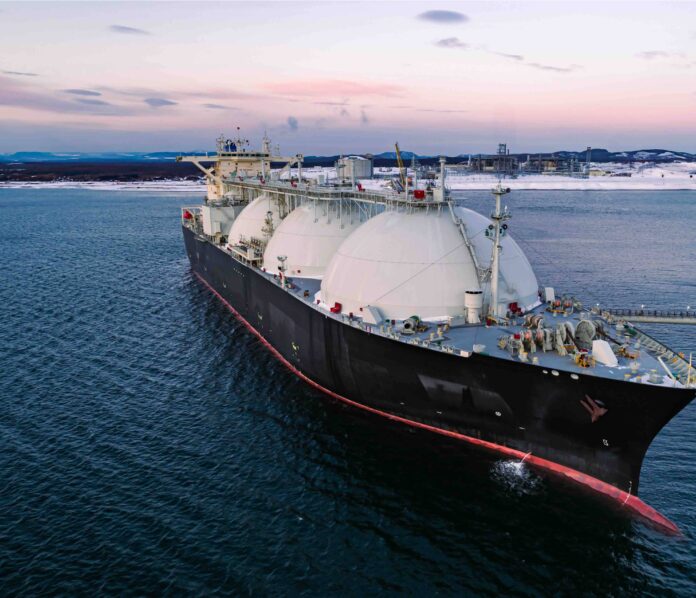
The Arctic Metagaz, carrying 62,000 tonnes of LNG from Murmansk, was hit by explosions and sank between Libya and Malta on March 3. Russia accuses Ukraine of launching naval drones from Libyan territory. Two days later, Putin publicly mused about cutting all remaining gas supplies to Europe. The TTF has surged 31% in a week.
The sinking is not, by itself, a transformative event. One LNG carrier, even one loaded with a cargo worth more than $50 million at current European spot prices, does not reshape a continental energy market. What makes it significant is context. It arrives at a moment when every alternative source of gas that Europe relies upon is simultaneously under threat, and the loss of the Arctic Metagaz is less an isolated incident than a demonstration of how thin Europe’s energy security margin has become.
What Happened to the Arctic Metagaz
Libyan maritime authorities confirmed that the vessel, a 277-metre LNG carrier built in 2003 and operating under a Russian flag, experienced sudden explosions approximately 130 nautical miles north of the Libyan port of Sirte in the early hours of March 3. A fire engulfed the ship and it subsequently sank. All 30 crew members, Russian nationals, were rescued in a lifeboat within Libya’s search-and-rescue zone, per a statement from Malta’s Armed Forces.
Russia’s Ministry of Transport called the attack “an act of international terrorism and maritime piracy” and accused Ukraine’s SBU of launching unmanned sea drones from Libyan territory, according to BBC and Euronews reporting. Ukraine has not commented. The Libyan National Oil Corporation denied any involvement. Egypt’s petroleum ministry said the vessel was not scheduled to dock at any Egyptian port.
The Arctic Metagaz is registered to India’s Lathyrus Shipping and operated by SMP Technical Management of St Petersburg, per Euromaidan Press citing Reuters. The vessel is under EU, US, and UK sanctions because it transports LNG from Novatek’s Arctic LNG-2 project, which has been sanctioned since 2023. The ship was reportedly en route from Murmansk via the Suez Canal to China — a routing used by Russia’s shadow fleet to circumvent sanctions on Arctic LNG exports. Greek maritime security firm Diaplous told Naftemporiki that multiple explosions occurred at approximately 04:00 and that the ship was likely struck by naval drones.
This is not the first such attack in the Mediterranean. In December 2025, the SBU publicly claimed responsibility for a drone strike on the tanker Qendil, also in the Mediterranean, describing it as an operation conducted more than 2,000 kilometres from Ukrainian territory. The escalation from oil tankers to LNG carriers — a far more specialised and limited class of vessel — represents a meaningful step up in operational ambition.
Putin’s Response
On the same day the Arctic Metagaz sank, Vladimir Putin made comments that Russian state media characterised as “thoughts out loud.” He noted that the European Union plans to introduce restrictions on Russian gas purchases, including LNG, within a month, with a full ban projected by 2027. “And now other markets are opening. And maybe it’s more profitable for us to stop supplying to the European market right now?” Putin said, per EADaily. “Go to those markets that are opening up and gain a foothold there. If they close us down in a month or two anyway, wouldn’t it be better to stop now?”
Putin qualified the remarks by saying there was “no political background” and that they were merely speculative. That qualification should be taken precisely as seriously as it deserves, which is to say not very. Russian pipeline gas still flows to the EU through the TurkStream corridor. Russia is projected to export approximately €4 billion in LNG to EU member states in 2026, per European Commission estimates cited by Energy News Beat. A voluntary Russian cutoff, even a partial one, would arrive at the worst possible moment.
The Triple Squeeze
Europe’s gas supply is now under pressure from three directions simultaneously. The first is the Strait of Hormuz. QatarEnergy halted LNG production on March 3 after Iranian drone strikes hit two of its gas facilities, per its own statement. Qatar accounts for roughly one-fifth of global LNG exports. The effective closure of the Strait means that even once production resumes, shipments cannot reach European terminals until tanker traffic through the waterway is restored. Goldman Sachs raised its April TTF forecast to €55 per megawatt-hour from €36, and its Q2 average to €45, per an Investing.com report. On Tuesday, the TTF had surged 31% to €58.60 per megawatt-hour, its highest level since 2023.
The second pressure point is the Russian shadow fleet. The Arctic Metagaz was not a rogue vessel. It was part of an organised logistics chain that has kept sanctioned Russian LNG flowing to global markets, including indirectly to Europe via transhipment through third countries. The sinking demonstrates that Ukraine now has the capability to interdict these cargoes in open Mediterranean waters, far from the Black Sea where previous drone attacks on Russian shipping were concentrated. If this capability is sustained, the risk premium on any vessel associated with Russian LNG — already elevated due to insurance restrictions — rises substantially. The number of ice-class LNG carriers capable of operating on the Northern Sea Route is limited. Losing even one imposes a real logistical constraint.
The third is the broader structural decline in European gas supply options. Russian pipeline gas, which once supplied roughly 40% of EU demand, has dropped below 15%. Norwegian pipeline flows are at or near capacity. Domestic production, primarily from the Netherlands, is in terminal decline since the closure of the Groningen field. EU gas storage stood at approximately 39.2% in early February, compared with 52% a year earlier, per Trading Economics. German storage was at 30.2%, France at 29%, the Netherlands at 23.5%. Stocks were projected to fall to around 26% by the end of March even before the Hormuz disruption.
What Goldman Is Pricing
Goldman Sachs warned that TTF prices could rise 130% from pre-conflict levels if the Qatari outage persists and Strait of Hormuz flows remain disrupted. That would place European gas prices back in territory last seen during the 2022 energy crisis following Russia’s invasion of Ukraine. The bank’s analysts, including Samantha Dart and Frederik Witzemann, cited higher-than-expected winter gas-for-power demand, uncertainty around the duration of the Qatari shutdown, and the compounding effect of the Iran conflict on global LNG logistics.
The sinking of the Arctic Metagaz was not in Goldman’s model. Neither were Putin’s comments about a voluntary supply cutoff. Both arrived within 24 hours of the TTF hitting its one-year peak. The European Commission has maintained that it will proceed with its planned phaseout of Russian gas imports, with member states required to submit national diversification plans by this month. That timetable assumed a managed transition. A simultaneous loss of Qatari LNG via Hormuz, Russian shadow fleet LNG via Ukrainian interdiction, and remaining Russian pipeline gas via Putin’s political calculation is not a managed transition. It is a supply crisis.
EU energy ministers may need to convene an emergency session ahead of the scheduled Energy Council on March 18. The question they face is not whether prices will rise further — Goldman’s models suggest they will — but whether the storage targets mandated under the EU’s 2022 gas storage regulation can still be met. Reaching 90% by November 1 was already going to require aggressive summer injection. Reaching it with three supply sources simultaneously compromised may require emergency procurement at prices no government is eager to explain to voters already dealing with an inflation surge driven by $80 oil.
The Arctic Metagaz carried 62,000 tonnes of gas to the bottom of the Mediterranean. Europe’s energy arithmetic was already fragile enough that the loss matters. That is the point.
For a complete timeline of how the Iran war reshaped global markets, see our reference page.