


Reading time: 5 min
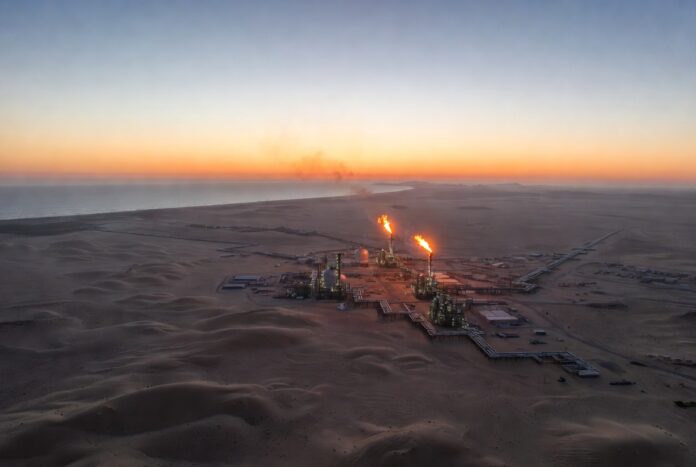
ADNOC Gas filed a bourse disclosure on Monday confirming it had made “temporary operational adjustments” to LNG and export-traded liquids production. The company’s Das Island facility sits inside the Gulf. Every tanker loading there has to transit the Strait of Hormuz to reach open water. The strait has been effectively closed since March 2. Three weeks into this war, the Gulf’s largest energy producers are no longer debating whether the disruption is temporary. They are pricing how deep the contraction goes.
Das Island Is Stranded Behind the Blockade
Das Island carries 6 million tonnes per annum of LNG nameplate capacity. It is one of the UAE’s core gas export assets. But unlike Fujairah, which sits on the Gulf of Oman outside the chokepoint, Das Island requires passage through Hormuz. With Iranian IRGC warnings still active, tanker traffic through the strait running at roughly one-fifth of normal levels, and 21 confirmed attacks on merchant vessels since February 28, no commercial LNG carrier is making the transit voluntarily. ADNOC said it was working with customers “on a transaction-by-transaction basis to fulfil commitments wherever possible.” That language means force majeure is operating in practice even if ADNOC has not declared it formally on gas.
Fujairah is no better. Drone strikes hit the oil industrial zone twice in the past week. ADNOC suspended crude loading at the port after the first attack. Two of three single-point moorings have since reopened, but ADNOC’s own crude terminals remain offline. Fujairah normally handles roughly one million barrels per day of Murban crude, about one percent of global demand. The Shah gas field, operated by ADNOC in a joint venture with Occidental Petroleum and supplying at least 500 million cubic feet per day to the domestic grid, was also hit. UAE daily crude output has fallen by more than half since the conflict began, according to Reuters.
The UAE has the Abu Dhabi Crude Oil Pipeline, or ADCOP, running to Fujairah with a nameplate capacity of 1.5 million barrels per day. Kpler estimates it is operating at 71 percent utilisation with roughly 440,000 barrels per day of spare capacity. ADNOC can temporarily push throughput to 1.8 million barrels per day. But that is a bypass for crude, not for LNG. And it does not replace the 20 million barrels per day that normally transited Hormuz. Saudi Arabia’s East-West Pipeline to Yanbu on the Red Sea has a nameplate capacity of 7 million barrels per day, roughly 70 percent of the Kingdom’s OPEC+ quota. But the Red Sea route is exposed to Houthi interdiction, and neither pipeline can move LNG.
Goldman Put a Number on the Contraction
Goldman Sachs estimated that if the war continues through the end of April with the strait remaining effectively closed, Qatar and Kuwait could see GDP contract by 14 percent. The UAE faces a projected 5 percent contraction. Saudi Arabia, with its pipeline redundancy and larger non-oil economy, faces 3 percent. Those are not annualised rates. Those are full-year 2026 GDP figures conditional on a two-month war.
Rystad Energy reported that Middle Eastern oil output had already declined from 21 million barrels per day to 14 million in the first week of the conflict. In a worst-case scenario where commercial shipping continues to avoid the strait indefinitely, Rystad projected output could fall to 6 million barrels per day. Capital Economics suggested GCC GDPs could fall by double digits if the disruption persists into the second quarter. Al Jazeera reported that the economic fallout could be comparable to the 1991 Gulf War if the war drags on, citing Yesar Al-Maleki at the Middle East Economic Survey.
The damage extends well beyond energy. Tourism accounts for roughly 11 percent of GCC GDP. Airspace closures led to 37,000 flight cancellations in the first ten days alone, according to Cirium. Dubai hotel bookings have dropped by more than 60 percent. Jebel Ali Port, which accounts for 36 percent of Dubai’s GDP, suspended operations after a berth caught fire from intercepted missile debris. An Amazon Web Services data centre in Dubai was damaged by drone shrapnel, marking what Foreign Policy described as possibly the first time a major cloud facility was hit in a war. The UAE is now considering freezing Iranian assets held through Dubai-based shell companies and informal currency exchanges, the Wall Street Journal reported, in what would be a fundamental shift in the emirate’s longstanding policy of balancing relations with both Washington and Tehran.
Trump Gave Iran 48 Hours. Iran Responded With Naval Mines.
On Saturday, President Trump threatened to “obliterate” Iranian power plants if Tehran does not fully reopen the Strait of Hormuz within 48 hours. Iran’s response came the same day. Senior military officials threatened to deploy naval mines across the Gulf if the United States or Israel attack Iranian coastline or islands. Iran also warned it would target energy and water desalination infrastructure in Gulf states if strikes on Iranian soil continue.
The 48-hour window expires on Monday. If Trump follows through, the escalation ladder moves from energy infrastructure to civilian utilities. If he does not, the credibility of the threat erodes and Iran’s effective closure of the strait continues without military consequence. Either outcome is negative for energy markets. Brent closed Friday at $112.19, up 8.3 percent on the week and 84 percent year to date. The IEA has already released 400 million barrels from strategic reserves, the largest coordinated release in its 52-year history. The market did not care.
India and Pakistan have sent destroyers to escort tankers in the Gulf of Oman but not through the strait itself. France announced a defensive escort mission under Operation Aspides and is deploying a dozen ships. The UK, Germany, and Italy are working to support commercial shipping. But escorting 3 to 4 ships per day with 7 to 8 destroyers does not restore 20 million barrels per day of throughput. It restores a fraction, and even that fraction requires accepting the risk of Iranian midget submarines and newly threatened minefields.
If you are long anything that moves through the Gulf, your position is now hostage to a 48-hour deadline set by a president who has already exhausted the IEA strategic reserve, lifted sanctions on Iranian oil at sea while bombing Iran, and watched Brent swing 34 dollars in a single session without producing a floor. ADNOC is not adjusting LNG production because it wants to. It is adjusting because the tankers cannot leave. That is the only sentence that matters for your book this week.
For a complete timeline of how the Iran war reshaped global markets, see our reference page.