


Reading time: 6 min
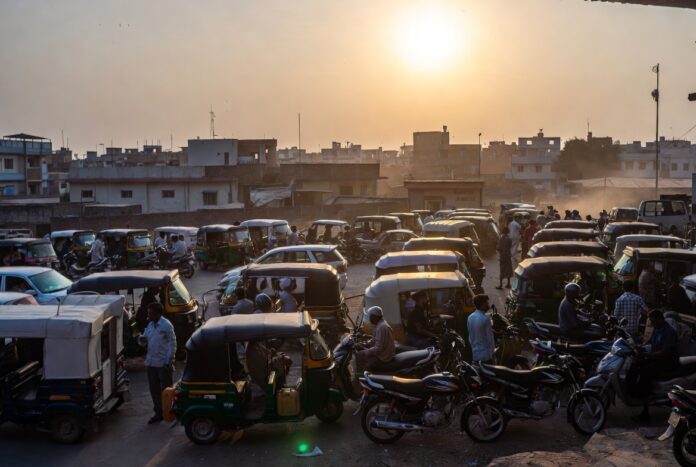
Bangladesh stationed troops at oil depots. The Philippines cut the government work week to four days. Thailand ordered state agencies to work from home. Nepal began rationing cooking gas. India invoked emergency powers to redirect liquefied petroleum gas from industrial users to households. Three weeks into the war, the conversation in Asia is no longer about the price of oil. It is about whether there is enough of it to keep the lights on.
80 Percent of Hormuz Crude Goes to Asia. Most of It Has Stopped.
Approximately 80 percent of the crude oil and liquefied natural gas that transits the Strait of Hormuz is destined for Asian markets, with China, India, Japan, and South Korea as the primary recipients. Around two-thirds of Iraq’s crude oil exports are shipped to China and India, whose refineries are configured to process heavier grades. Those refineries have temporarily halted production after Israeli strikes on Iranian energy infrastructure and Iranian retaliatory strikes on facilities across Qatar, the UAE, and Saudi Arabia.
The Philippines, Thailand, Malaysia, and Brunei rely on imports for 60 to 95 percent of their crude supply, according to Alloysius Joko Purwanto, an economist at the Jakarta-based Economic Research Institute for ASEAN and East Asia. Around 80 percent of Qatar’s LNG exports are shipped to Asia through Hormuz. When that supply stopped, governments across the continent moved from monitoring to rationing within days.
Bangladesh, which imports approximately 95 percent of its energy needs, imposed fuel price caps, closed universities, turned off decorative lighting for the Eid al-Fitr celebrations, and deployed soldiers to oil storage facilities to prevent hoarding. The country turned to China and India for emergency diesel imports. Pakistan sent warships to escort merchant vessels in the Gulf of Oman and introduced a slate of domestic fuel-saving measures. India invoked emergency powers to redirect LPG supplies from industrial consumers to households. As of last week, 22 LPG tankers were waiting offshore while only one had managed to dock at an Indian port.
Four-Day Work Weeks and Closed Schools Are Not Forecasts. They Are Policy.
The emergency measures being implemented across Asia are not recommendations from international agencies. They are government mandates backed by executive authority. The Philippines announced a reduced four-day work week for some government offices and urged residents to keep air conditioning at 24 degrees Celsius or higher. Thailand directed state agencies to adopt work-from-home arrangements to reduce fuel demand. The IEA’s March 20 report, which recommended remote work and lower speed limits as demand-reduction tools, was published after several Asian governments had already implemented those measures unilaterally.
The agricultural dimension compounds the energy shock. Asia depends heavily on the Middle East for fertiliser supply. The Persian Gulf is a critical hub for global fertiliser production because natural gas is a primary input for urea, the world’s most widely used nitrogen fertiliser. With Qatar’s Ras Laffan complex damaged and Hormuz effectively closed, fertiliser supply chains have been disrupted alongside fuel supply chains. For food-importing economies across South and Southeast Asia, the war is arriving on two fronts simultaneously: the fuel to transport food and the fertiliser to grow it.
Indonesia’s situation illustrates the compounding effect. Official data cited by ING indicates that layoffs in the country reached 42,000 in the most recent reporting period, up 32 percent year on year, primarily in industrial and retail sectors. Chinese overcapacity was already weighing on Indonesian manufacturing before the war. Now rising energy costs are adding a second layer of margin compression to businesses already losing competitiveness. Indonesia’s central bank is one of the few in Asia still expected to cut rates in 2026, but the inflationary impulse from oil above $100 makes that path significantly harder to justify.
Japan Is Deflating While the Rest of Asia Rations Fuel
Japan’s consumer price index fell to 1.3 percent in February, according to data released on Tuesday by the Statistics Bureau. That is the lowest reading since March 2022 and sits below the Bank of Japan’s 2 percent target for the first time in almost four years. The decline was driven by stabilising food prices and government fuel subsidies that are suppressing headline inflation at precisely the moment the rest of Asia is experiencing an inflationary shock.
The paradox is structural. Japan is a net energy importer that sources a significant share of its LNG and crude through the Middle East. The war should be raising Japanese inflation, not lowering it. But the Takaichi government has chosen to absorb the energy price shock through fiscal transfers rather than allowing it to pass through to consumers. Nikkei Asia reported on March 24 that Japan is tapping strategic reserves as businesses and local governments struggle to purchase fuel. The government is aiming to cushion the economic impact of the Middle East conflict through additional spending measures.
This creates a policy contradiction that the Bank of Japan cannot easily resolve. Governor Ueda held rates at 0.75 percent at the March meeting with one dissenting vote calling for a hike to 1.0 percent. The BOJ has been trying to normalise monetary policy after decades of deflation, and falling CPI undermines the case for further tightening. But the yen remains under pressure, real wages have been negative for four consecutive years per Nikkei Asia, and the subsidies suppressing headline inflation are funded by fiscal expansion that will eventually require either higher taxes or higher bond issuance. Japan is buying time. The question is how much time the war gives it.
The Yuan Toll and the Dollar’s Last Advantage
An Iranian official told CNN that Tehran is considering allowing cargoes traded in Chinese yuan to transit through the Strait of Hormuz. If implemented, the measure would create a two-tier pricing system for passage through the world’s most important energy chokepoint: yuan-denominated shipments get through, dollar-denominated shipments face either the $2 million ad hoc fee that Bloomberg reported on Tuesday or the risk of interdiction.
China receives roughly a third of its crude oil through Hormuz and holds massive strategic petroleum reserves estimated at approximately one billion barrels, or several months of supply. Beijing has the financial and logistical capacity to weather a prolonged disruption better than any other major Asian importer. India does not. Japan does not. South Korea does not. If Iran begins selectively pricing access to the strait by currency denomination, it would represent the most concrete step toward de-dollarisation of energy trade since the petrodollar system was established in the 1970s.
The United States remains better positioned than Asia to absorb the economic impact of the conflict. The US is the world’s largest oil producer and a net petroleum exporter. American oil companies stand to benefit from the loss of Middle Eastern supply. But the strategic reality is that Brent above $100 is not a price signal in Asia. It is an emergency. Schools are closing, armies are guarding fuel depots, and governments are telling workers to stay home. The continent that manufactures the majority of the world’s goods is being asked to do it with less energy and less fertiliser than at any point since the 1970s oil crisis, and with no visibility on when either comes back. Three weeks in, that is no longer a risk scenario. It is the baseline.
For a complete timeline of how the Iran war reshaped global markets, see our reference page.