Reading time: 5 min
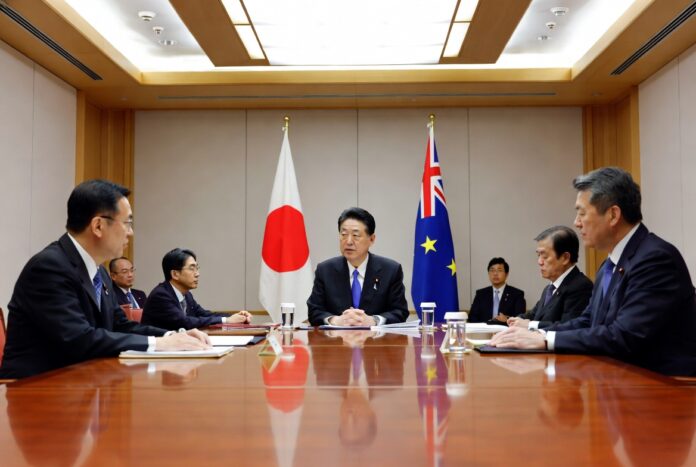
Prime Minister Sanae Takaichi met IEA Executive Director Fatih Birol in Tokyo on Wednesday and asked the agency to prepare an additional coordinated release of oil reserves. The first release, agreed on March 11, unlocked 400 million barrels. Birol said that was only 20 percent of what IEA member countries hold. He added that he was ready to move forward if necessary. Takaichi told him Asian countries are struggling significantly. Forty-five Japanese ships remain stranded in the Gulf.
Japan Used 20 Percent of the Emergency Stockpile. It Is Already Asking for More.
The March 11 coordinated release was the largest in the IEA’s 52-year history. It was designed to offset the loss of roughly 20 million barrels per day that normally transits the Strait of Hormuz. Two weeks later, the strait remains effectively closed. Iran has made 21 confirmed attacks on merchant vessels. Tanker traffic is running at approximately one-fifth of normal levels. The 400 million barrels bought time. They did not buy a solution.
Takaichi’s request is significant because it moves the IEA from reactive to pre-positioned. She did not ask for an immediate release. She asked the agency to prepare for one, which means Tokyo is planning for a war that extends beyond April. Japan started releasing 15 days’ worth of private-sector petroleum reserves last week. On Tuesday, it announced it would begin tapping government stockpiles. It also plans to release crude from joint reserves held in the country by Saudi Arabia, the UAE, and Kuwait under agreements that give Japanese oil companies preferential purchasing rights during emergencies.
Birol confirmed in Tokyo that the IEA is consulting with governments across Asia and Europe about further releases. He is in Australia this week ahead of a G7 meeting. The 400 million barrels released so far represent 20 percent of total IEA member stocks. That leaves roughly 1.6 billion barrels in reserve. But reserves are not production. They are a buffer that buys weeks, not months, and every barrel released is a barrel that cannot be released again until it is replenished. Hitoshi Nagasawa, chairman of the Japan Shipowners’ Association and head of NYK Group, one of the world’s largest shipping companies, said on Wednesday that 45 Japan-related vessels remain stranded in the Gulf.
India’s Private Sector Hit a Three-Year Low Before the War’s Full Impact Landed
HSBC’s flash India Composite PMI, compiled by S&P Global, fell to 56.5 in March from 58.9 in February. That is the lowest reading since October 2022 and the first hard data point showing the war’s impact on Asia’s third-largest economy. The manufacturing PMI dropped to 53.8, a four-and-a-half-year low, from 56.9 in February. Both readings remain above the 50 threshold separating expansion from contraction, but the pace of deceleration is steeper than anything India has experienced since the pandemic recovery phase.
The breakdown is instructive. Domestic new orders rose at the slowest pace in more than three years as market disruptions and energy costs weighed on demand. Input costs for private companies rose at the quickest pace in close to four years, driven by price increases across aluminium, chemicals, electronic components, energy, food, iron ore, leather, oil, rubber, and steel. Companies absorbed part of the increase by compressing margins, but output charges still rose at the fastest rate in seven months. HSBC’s chief India economist, Pranjul Bhandari, noted that the energy shock is unfolding in real time across both manufacturing and services.
The counterpoint came from exports. International sales rose at a record pace in March, led by service providers. That divergence, weakening domestic demand alongside surging exports, suggests India’s economy is splitting into two tracks. The export sector benefits from a weaker rupee and redirected global demand. The domestic economy absorbs the inflation. If the war persists into the second quarter, the PMI readings will likely fall further as the full pass-through of energy costs reaches consumers.
Malaysia Called an Emergency Economic Meeting. Then Called Another One.
Prime Minister Anwar Ibrahim chaired a special National Security Council session on Tuesday to coordinate Malaysia’s response to the conflict. On Wednesday, he convened a special National Economic Action Council meeting to deliberate further measures. Two emergency meetings in two days from a country that imports 60 to 95 percent of its crude supply. Malaysia’s NSC said it welcomed the five-day pause in attacks as an opportunity for sincere negotiations, but its actions suggest the government is preparing for the pause to fail.
Anwar held phone conversations on Tuesday with the leaders of Japan, Bahrain, the UAE, and New Zealand. The breadth of those calls, spanning energy importers and Gulf producers, indicates Malaysia is working both sides of the supply chain simultaneously. The Thai stock market surged 3.37 percent on Wednesday on ceasefire hopes, but the underlying reality across ASEAN has not changed. The Philippines is running a four-day government work week. Thailand sent state agencies home. Bangladesh stationed troops at fuel depots. Malaysia’s emergency meetings are the institutional version of the same impulse: this is no longer a watch-and-wait situation.
The Institutional Escalation Is the Story
Three weeks ago, Asia’s response to the war was market-based. Central banks adjusted rate expectations. Treasuries repriced. Currencies moved. That phase is over. What is happening now is institutional. A G7 prime minister is flying IEA leadership to Tokyo to prepare a second emergency drawdown. India’s largest private-sector survey shows the steepest demand deterioration in three years. A Southeast Asian government is holding back-to-back emergency economic councils. The Asian Development Bank announced on Tuesday that it is mobilising financial support to mitigate the war’s economic shocks.
The Boao Forum for Asia released its 2026 annual report this week projecting regional growth of 4.5 percent. That projection was finalised before the war began. S&P Global’s March update cut growth forecasts across the board and raised inflation projections for every major Asian economy. Their alternative scenario, in which the strait remains closed through April and Brent averages $200 in the second quarter, would tip Japan, and likely several other Asian economies, into recession.
Birol said in Tokyo that he hoped a further release would not be necessary. Takaichi’s response was to ask him to prepare one anyway. That gap between hope and preparation is where Asia’s policy apparatus is operating right now. The 400 million barrels bought the continent roughly three weeks. If the next three weeks look like the last three, the question is not whether a second release happens. It is whether 1.6 billion barrels is enough to cover a war that nobody can predict the end of.
For a complete timeline of how the Iran war reshaped global markets, see our reference page.