


Reading time: 6 min
Brent is at $103. The Strait of Hormuz has been effectively closed for two weeks. And across Southeast Asia, governments are doing what they do when the numbers get ugly: working-from-home orders, four-day weeks, price caps, and emergency tariff cuts. None of it solves the underlying problem. The crude isn’t moving, the reserves are running, and the question isn’t whether the region feels pain. It’s how much.
The Numbers That Matter
Start with Vietnam. The country holds combined commercial and national petroleum reserves equivalent to roughly 20 days of consumption, per the Institute for Energy Economics and Financial Analysis. Its government announced plans on March 10 to procure approximately 4 million barrels of crude from non-Middle Eastern suppliers. Sam Reynolds, a researcher at IEEFA, told Al Jazeera that those 4 million barrels represent just six days of domestic consumption. That procurement plan doesn’t close the gap. It extends the runway.
The Philippines is in a structurally worse position. The country sources 96% of its oil from the Gulf, per The Diplomat, and 98% of its raw crude importation comes directly from the Middle East, according to the Philippine Information Agency. Energy Secretary Sharon Garin addressed a common misconception this week: that the Philippines is insulated because it buys refined products from Asian neighbours rather than crude from the Gulf directly. “Refining countries in Asia, such as China, South Korea, Singapore, and Japan, source their crude oil from the Middle East,” Garin said. “If they cannot get crude oil because the strait is closed, they cannot refine it, and they cannot sell the finished products to us.” The domino effect runs upstream, not just downstream.
Governments Buying Time
The policy response across the region looks coordinated only in its urgency. Thailand ordered civil servants on March 10 to take the stairs rather than lifts, set air conditioning at 27 degrees Celsius, and work from home for the duration of the crisis, per Fortune. Thai Prime Minister Anutin Charnvirakul has also announced a temporary price cap on diesel. Thailand holds roughly 95 days of energy reserves per Reuters, making it relatively better cushioned than its neighbours, but Rayong Olefins, a unit of Siam Cement Group, suspended plant operations this week because it could not obtain naphtha and propane, per Al Jazeera.
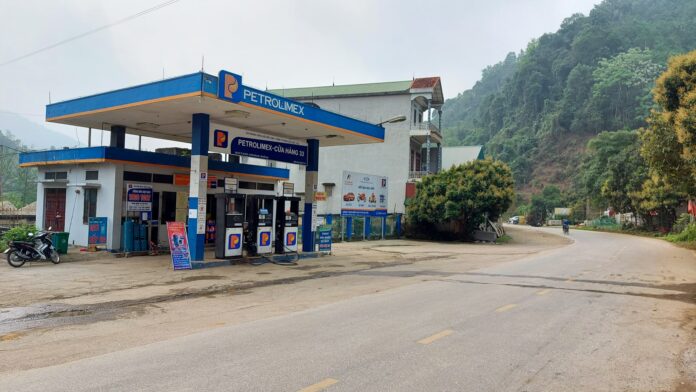
Vietnam, operating with far thinner buffers, cut import tariffs on several fuel categories to zero percent through Decree No. 72/2026/ND-CP, effective March 9 through April 30, per Vietnam Briefing. The government has also begun drawing on its Fuel Price Stabilisation Fund, which held approximately VND 5.6 trillion (around $224 million) as of Q3 2025, with Petrolimex holding the largest balance. In addition, authorities instructed businesses on March 10 to allow remote work to reduce transport fuel consumption. These are demand-side interventions. They do not produce a single additional barrel.
The Philippines moved government offices to a four-day working week and ordered officials to limit travel to essential functions only. President Ferdinand Marcos Jr. sought emergency authority from Congress to temporarily reduce excise taxes on petroleum products if global oil prices continue climbing, citing a trigger price of $80 per barrel for a month as the threshold for emergency powers. That threshold has already been breached. Marcos told reporters the country has sufficient fuel for now. The Philippine Information Agency confirmed national stocks equivalent to 60 days of supply, triple the minimum reserve requirement. That is the most comfortable position in the region’s frontline importers, but it is not a permanent solution.
The Refinery Chain Is Fracturing
The supply shock is not limited to crude. As Asian refineries cut throughput due to constrained crude availability, the shortage is cascading into refined products: gasoline, diesel, jet fuel, and petrochemicals. Singapore’s Aster Chemicals and Energy and Indonesia’s PT Chandra Asri Pacific have both declared force majeure on contractual obligations, per Al Jazeera and The Diplomat. Thailand has banned oil exports, with the exception of shipments to Cambodia and Laos. China has ordered state-owned companies to suspend fuel exports. The downstream product market that Vietnam and the Philippines depend on for their refined imports is tightening from both ends.
The LNG market compounds the problem. The Japan-Korea Marker, Asia’s LNG spot benchmark, spiked 50% between February 27 and March 9, per IEEFA. The Philippines and Vietnam both began importing LNG only in 2023 and source most cargoes on spot markets, making them acutely exposed to that price surge. Bangladesh purchased a spot LNG cargo at $28.28 per million British thermal units this week, nearly three times the JKM price from the prior month. Pakistan has halted LNG purchases entirely. Qatar’s Ras Laffan shutdown has removed a fifth of the world’s LNG capacity from the market, and no short-term alternative fills that volume at anything close to pre-war prices.
The Macro Arithmetic
MUFG Research, in a note published March 9, estimated that every $10 per barrel increase in oil prices cuts Philippine GDP growth by approximately 0.2 percentage points and raises inflation by around 0.6 percentage points. At current Brent levels above $100, sustained through the quarter, that implies GDP growth falling toward 3.7% in 2026 against a prior forecast of 4%, with inflation breaching the Bangko Sentral ng Pilipinas upper target of 4% and potentially staying there through 2027. MUFG also flagged the Philippine peso as vulnerable, with USD/PHP potentially rising above the 60 level if the conflict persists, against a baseline forecast of 58.00 for Q4 2026 that assumed a resolution by end of March.
The Economist Intelligence Unit, in a note cited by Al Jazeera, expected global oil prices to average around $80 per barrel in 2026, with elevated natural gas prices raising inflation and lowering growth across much of Asia. That forecast was published before Brent crossed $100. The gap between what was modelled and what is now trading is the measure of how much the regional macro outlook has deteriorated since the conflict began. June Goh, a senior oil market analyst at Sparta Commodities in Singapore, told the Christian Science Monitor this week that the region should “prepare for some belt-tightening” and that “we will see a fair bit of pain in our region for at least a few months.”
The Buffer Comparison
The strategic reserve disparity within Asia is stark and largely unaddressed. Japan holds petroleum reserves equivalent to 254 days of demand. South Korea holds approximately 208 days. China around 120 days. Vietnam holds fewer than 20 days. The gap between the region’s most prepared economies and its most exposed is not a gap that can be closed in weeks. Vietnam’s Prime Minister this week requested the Ministry of Industry and Trade to study a plan to increase domestic petroleum reserve capacity to a minimum of 90 days of imports. It is the right ambition. It is also a multi-year infrastructure project, not a response to a crisis that is deepening now.
The IEA’s 400 million barrel release, agreed unanimously by member nations on March 11, is the largest coordinated reserve draw in the agency’s history. The market’s response was clear: Brent barely flinched. That 400 million barrels amounts to roughly four days of global production. Against a disruption that is now entering its third week with no visible de-escalation, it is a holding measure, not a resolution. The Strait of Hormuz moved about 20 million barrels per day before it closed. Every additional week it stays shut adds another 140 million barrels to the cumulative supply deficit. The IEA release covers less than three weeks of that shortfall at full flow. Southeast Asia’s governments understand the arithmetic. That is why they are telling their civil servants to take the stairs.
For a complete timeline of how the Iran war reshaped global markets, see our reference page.