


Reading time: 5 min
Brent settled at $112.19 on Friday, its highest close since the war began. The administration’s response was to temporarily unsanction the oil belonging to the country it is actively trying to destroy. That is not a policy. It’s a margin call on foreign policy itself.
Treasury Secretary Scott Bessent announced Friday that the US is lifting sanctions on Iranian crude oil and petroleum products currently loaded on vessels, per a narrowly tailored authorization effective March 20 through April 19. It covers related services including crew management, insurance, and docking. Bessent told reporters the move would bring approximately 140 million barrels to global markets. At current Brent prices, those barrels are worth more than $14 billion to Tehran, per NBC News. So to be clear: the US is conducting airstrikes against Iran while simultaneously funding its adversary’s treasury through oil sales to allied nations.
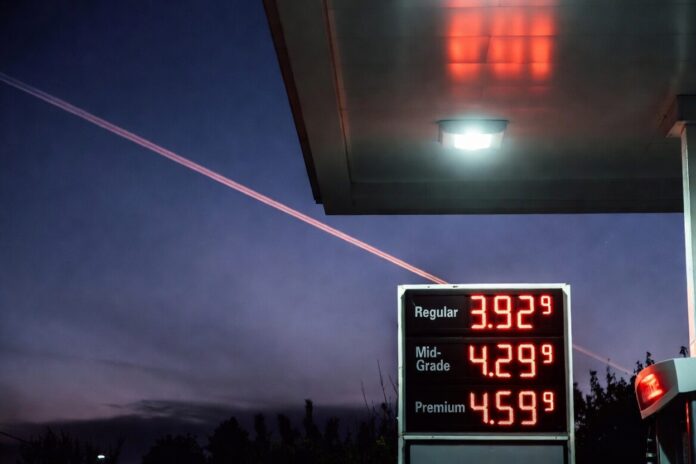
The market’s reaction was muted, which tells you everything about how much faith the desk has in temporary supply measures at this point. Brent has spent most of the past two weeks above $100 and closed Friday up 8.3% for the week and 84% for the year, per NBC News. WTI rose to roughly $98.35. US retail gasoline prices have climbed $0.93 per gallon since January. Goldman Sachs suggested Friday that elevated prices could persist through 2027. If your book is positioned for a quick resolution, Goldman just told you the timeline doesn’t work.
The Administration Has Run Out of Levers
CNN reported Friday, citing three people familiar with internal discussions, that the administration is “running out of options” to contain the energy crisis. Not our words. Theirs. The US has already released hundreds of millions of barrels from the Strategic Petroleum Reserve, eased sanctions on Russian crude, and accelerated domestic flows. The IEA coordinated a record 400 million barrel reserve release on March 11, the largest in the agency’s 52-year history, and prices barely flinched.
Now the last remaining lever is letting Iran sell its own oil while American jets fly over Iranian airspace. Gregory Brew, senior analyst at Eurasia Group, put the sequencing problem plainly: once buyers absorb the oil currently at sea, the next logical step is dropping sanctions on Iranian oil generally. The temporary waiver creates its own momentum.
US Ambassador to the UN Mike Waltz defended the move at a CNN town hall Friday night, calling it “very temporary” and framed around defeating Iran’s strategy of driving prices higher. Follow the logic here, because it’s worth tracing. Iran closed Hormuz, which drove prices up. The US can’t reopen Hormuz, at least not yet. So it’s letting Iran sell oil to allies like India and Japan. Tehran collects the cash and continues fighting the war that caused the supply crisis in the first place. The circularity isn’t accidental. It’s the only option left.
The Strait Isn’t Opening. More Troops Are Going.
Trump posted Friday that the US is considering “winding down” military efforts in the Middle East. Hours later, the USS Boxer, carrying thousands of Marines, departed California for the Persian Gulf, where it’ll arrive in approximately three weeks, per NPR. A senior Iranian source told CNN that Tehran doesn’t believe Trump’s claim. Looking at the ship manifest, it’s hard to argue with that read.
When asked Friday about the plan for restoring traffic through the Strait of Hormuz, Trump said “at a certain point, it’ll open itself,” per CNN. He also called NATO allies “cowards” for not helping the US secure the waterway. Meanwhile, Kuwait’s Mina Al-Ahmadi refinery, the country’s largest, was struck by Iranian drones overnight Friday, igniting fires at several operational units. The war is expanding, not winding down, and the energy infrastructure damage is accelerating.
India offered a partial data point on what limited reopening looks like. One LPG tanker arrived in India earlier this week, with a second expected shortly after, per CNBC. But 22 additional vessels carrying crude, LPG, and LNG were still waiting for Iranian confirmation to transit as of mid-week. The strait, which carried roughly 20% of global oil before the war, remains functionally closed for commercial shipping.
What $112 Brent Means for Your Positioning
Equities didn’t fare any better. The S&P 500 closed down 1.51% on Friday, completing its fourth consecutive losing week, the worst four-week stretch since April 2025’s tariff shock. Nasdaq fell 2.01%. VIX jumped 11% to 26.78. United Airlines CEO Scott Kirby told employees Friday that the company will cancel flights to prepare for higher fuel costs. Oil touched $120 earlier this month before the IEA release brought it back to the $80s briefly, and it has since climbed right back above $110. The pattern is clear: every supply-side intervention buys a few days of relief, then price grinds higher.
Trump officials now privately estimate that elevated prices could linger for months, per CNN. That matches Goldman’s through-2027 call and it should change how you think about inflation, rates, and duration. The 10-year yield closed Friday at 4.39%, up 11 basis points on the day. CME FedWatch shows a 52% probability of a rate hike by October. The Fed can’t cut into an oil shock that the administration can’t resolve. And the administration can’t resolve an oil shock without ending a war it just sent more Marines to fight.
Those 140 million barrels of Iranian oil at sea are a bandage on an arterial wound. They’ll enter the market, get absorbed in days at current demand rates (the world consumes roughly 100 million barrels per day, per Bessent’s own framing), and then the same supply gap reopens. If Hormuz stays closed through Q2, there is no policy tool left that hasn’t already been used. Watch the 22 ships waiting for Iranian clearance off India. If they sail, you get a few more weeks of breathing room. If they don’t, $120 Brent comes back and the next round of sanctions relief will be harder to frame as temporary.
For a complete timeline of how the Iran war reshaped global markets, see our reference page.