


Reading time: 7 min
Nexus Luxembourg returns on June 10 and 11 at LuxExpo The Box. Ten thousand people. A hundred and fifty speakers. Five stages covering AI, fintech, GovTech and cybersecurity. And Finonity is covering it as an official media partner.

Why This One Is Different
Most tech conferences are the same event with different logos. You get a main stage with someone from a large American company talking about transformation, a series of panels where everyone agrees with each other, and a networking floor that smells like lanyard plastic. Nexus Luxembourg is not that.
What makes it worth the trip from wherever you’re reading this is the specific geography of the people in the room. Luxembourg sits at the intersection of European finance, EU regulatory power and serious technology investment in a way that no other city on the continent does. The Grand Duchy hosts more investment fund assets than any country in the world outside the United States, is home to the European Court of Justice, the European Investment Bank and a fintech ecosystem that has been growing quietly and decisively for the better part of a decade. When a summit about AI and technology happens in Luxembourg, the people it draws are not just founders and developers. They are the fund managers, the regulators, the policymakers and the institutional investors who actually decide what gets built and what gets funded at European scale.
That composition matters. A lot of what passes for AI conversation in 2026 happens between people who already agree on the premise. Nexus Luxembourg tends to put people in the same room who don’t necessarily share premises, and the conversations that come out of that friction are usually more useful than the ones designed for applause.
The Scale of the 2026 Edition
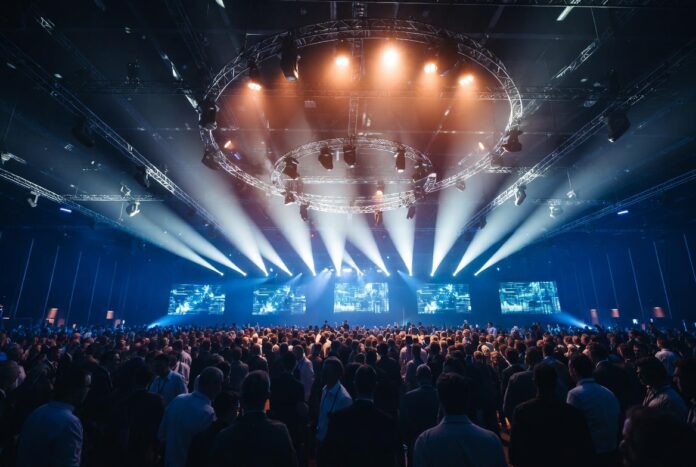
This year’s event brings together more than 10,000 visitors from over 50 countries across two days at LuxExpo The Box in the Kirchberg district. The speaker roster runs to 150 names spread across five stages, covering artificial intelligence, financial technology, government and civic technology, cybersecurity, and the broader questions of how these fields interact with regulation, capital allocation and geopolitical strategy.
The startup competition is one of the most competitive in Europe this cycle. Two hundred and fifty handpicked startups and scaleups are competing for a €100,000 Grand Prize distributed across ten categories. For early-stage founders, that is not just prize money. It is a room full of 10,000 people that includes the specific investors and corporate decision-makers most likely to actually write a cheque or sign a partnership agreement in the sectors those founders are building in.
The 2025 edition, for context, drew 8,400 attendees, over 500 speakers and 70 exhibitors across 17 stages, and generated roughly 950 dinner guests across its associated events. The trajectory is clear and the 2026 numbers are tracking ahead of it.
Five Stages, One Thesis
The format Nexus calls 4-in-1 is worth explaining because it is not just a branding decision. The summit runs five dedicated stages simultaneously, each with its own programming logic and audience. The AI stage operates at a different register than the fintech stage, which addresses a different set of questions than the GovTech or cybersecurity programming. Attending all five stages across two days is not really feasible, which means every attendee makes active choices about where to spend time based on what matters to them professionally.
That self-selection produces better hallway conversations than the all-things-to-all-people format most large conferences default to. When you know the person standing next to you at the fintech stage chose to be at the fintech stage, and not just defaulted to the nearest available seat, the quality of the exchange that follows is higher. It is a small design decision with significant practical consequences for how useful the two days actually are.
The Luxembourg government’s involvement adds a layer that is genuinely unusual for a tech summit. EU policymakers and institutional representatives who participate in Nexus programming are not there for optics. Luxembourg has been one of the most active jurisdictions in Europe in shaping the regulatory frameworks that govern fintech, digital assets and AI deployment at commercial scale. Conversations at Nexus frequently feed directly into the regulatory thinking that affects how companies across the continent have to operate. For anyone trying to understand where European AI and fintech regulation is heading before it arrives, being in that room on June 10 and 11 is a material information advantage.
What Finonity Is Covering and Why
Finonity covers financial markets, macroeconomics and the intersection of technology with capital. Nexus Luxembourg is the event in Europe where those three things converge most directly and most densely in a single venue. The AI models being discussed at LuxExpo in June are not hypothetical. They are tools being evaluated for deployment in asset management, risk assessment, credit scoring, fraud detection and regulatory compliance by the people sitting in the audience. The fintech founders presenting are raising rounds from European institutional investors who have offices twenty minutes from the conference centre.
That proximity between the technology being discussed and the capital and regulatory power that shapes its deployment is what makes Nexus Luxembourg worth covering properly, rather than just publishing a press release with a speaker list. Finonity’s team will be on the ground across both days, covering keynotes, tracking the startup competition, and reporting on the conversations that happen between sessions as much as the ones that happen on stage. The hallway is frequently where the actual news is.
We will be publishing pre-event analysis in the weeks leading up to June 10, live coverage during both days, and follow-up reporting on the themes and announcements that emerge from the sessions we attend. If there is a specific track, speaker or topic you want us to prioritise, that is a conversation worth having before the event rather than during it.

The Luxembourg Argument, Briefly
For readers who are not regularly in Luxembourg and are weighing whether the trip is worth it: the city’s position in European finance is genuinely underappreciated by people who associate European tech with London, Berlin, Paris or Amsterdam. Luxembourg manages over €7.6 trillion in fund assets as of August 2025, per Chambers and Partners’ 2026 investment funds guide, is the second largest fund domicile in the world after the United States, and is home to 117 international banks from 24 countries per CSSF data from September 2025, and has been building a specific specialisation in fintech infrastructure, digital securities and regulated digital assets that is increasingly difficult for other European jurisdictions to replicate from scratch.
The government’s commitment to technology investment is not rhetorical. The Luxembourg government has been one of the most consistent and early movers in Europe on digital identity, open banking infrastructure and the regulatory sandboxing that allows fintech companies to test products under regulatory supervision before full market launch. That policy environment is part of why the founders and investors who attend Nexus are disproportionately building for or investing in European regulated markets, rather than for purely consumer applications.
For anyone covering or investing in European fintech, AI infrastructure or the regulatory landscape that governs both, June 10 and 11 in Luxembourg is not an optional conference. It is where the relevant conversations are happening, in the relevant jurisdiction, with the relevant people.
Tickets, Agenda and Speakers
The full agenda for both days is published at nexusluxembourg.com/agenda, with sessions searchable by stage, topic and time slot. The speaker list, now at 150 confirmed names, is at nexusluxembourg.com/speakers. Tickets for the 2026 edition are available at nexusluxembourg.com.
LuxExpo The Box is in the Kirchberg district of Luxembourg City, well connected by public transport from the city centre and from Luxembourg Airport, which has direct connections from most major European hubs. The practical information page at nexusluxembourg.com/practical covers transport, accommodation options and everything else you need to plan the two days properly.
Finonity will be there. The event is worth being at. The two things are connected.
Nexus Luxembourg 2026 takes place on June 10 and 11 at LuxExpo The Box, Luxembourg-Kirchberg. Finonity is an official media partner of the event.