Reading time: 6 min
Fresh wallets. Funded hours before the strike. Perfect timing on a war bet. Polymarket’s insider problem just escalated from MrBeast videos to actual military operations — and nobody seems equipped to stop it.
Early Saturday morning, the United States and Israel launched coordinated strikes on Iran. President Trump called it “major combat operations.” Bitcoin dropped to $63,038 within hours. And somewhere on the internet, six anonymous wallets quietly collected roughly $1 million in profit from a bet they placed on Polymarket the night before.
Blockchain analytics firm Bubblemaps flagged the cluster on X shortly after the strikes. According to their analysis, most of the wallets were funded within 24 hours of the attack. All six were created in February. All bought “Yes” shares on the contract “U.S. strikes Iran by February 28, 2026?” — and all did so hours before explosions were reported across Tehran. The Block reviewed all six profiles and put the combined net profit at $989,191.
The Anatomy of a War Trade
The largest wallet in the group purchased over 560,000 “Yes” shares at roughly 10.8 cents each, spending about $60,816. When the contract resolved at $1, that single position paid out close to $500,000 — an 821 per cent return in days. A second wallet turned a $30,000 position into approximately $120,000. A third, operating under the name “Roeyha2026,” appeared just eleven hours before the strikes, dropped $50,000 on the March 1 contract, and walked away with $96,800 in profit, as flagged by on-chain tracker Lookonchain.
Then there is the other side of the trade. A user called anoin123, who had spent months building a $2 million position betting against a US strike, lost $6.5 million in a single day when the bombs fell, according to BeInCrypto. That is not a typo. Six and a half million dollars, gone because one person was convinced Trump would not pull the trigger.
Total volume on the February 28 contract alone hit nearly $90 million, CoinDesk reported. Across all related strike-date markets going back to December, more than $529 million has been wagered on whether and when America would hit Iran.
This Is Not New — It Is Getting Worse
If this feels familiar, that is because it is. In January, a freshly created Polymarket account bet $32,000 that Venezuelan President Nicolás Maduro would be removed from power — hours before the US military captured him. That trade returned over $400,000. Earlier this month, Israeli prosecutors indicted an IDF reservist and a civilian for allegedly using classified intelligence to place bets on Iran-related contracts on Polymarket, the same platform already under scrutiny over Binance’s Iran exposure and the broader regulatory scramble around crypto markets.
And then there is the meta-scandal that reads like satire. On Thursday — two days before the Iran strikes — blockchain sleuth ZachXBT published an investigation naming crypto platform Axiom as the target of an insider trading probe. Polymarket had created a contract letting users bet on which company would be named. Lookonchain identified twelve wallets that heavily bet on Axiom before the reveal, netting over $1 million, per CoinDesk. Someone insider-traded on a market designed to catch insider traders. You genuinely cannot make this up.
From MrBeast to Missiles
What makes this week uniquely absurd is the range. On Wednesday, regulated platform Kalshi announced its first public enforcement actions. The headline case involved Artem Kaptur, a visual effects editor for MrBeast, who placed roughly $4,000 in bets on what would happen in upcoming YouTube videos — things like what words MrBeast would say. Kalshi’s systems flagged his “near-perfect trading success on markets with low odds” as statistically anomalous, per Bloomberg. He was fined $20,397, suspended for two years, and reported to the CFTC.
Three days later, anonymous wallets were turning $60,000 into half a million by correctly predicting an airstrike on a sovereign nation. Kaptur bet four grand on YouTube trivia. These wallets bet six figures on a war. The enforcement gap is not a gap — it is a canyon. Kalshi, which is CFTC-registered, caught a guy betting on MrBeast videos. Polymarket, which runs offshore without identity checks, hosted what increasingly looks like defence-insider profiteering on military operations. Kalshi CEO Tarek Mansour pointedly noted on X that “regulated prediction markets are not allowed to do war markets.” Senator Chris Murphy responded the same day by announcing legislation to ban what he called “corrupt and destabilizing prediction markets.” Representative Ritchie Torres already introduced the Public Integrity in Financial Prediction Markets Act, which would bar federal officials from trading on government-policy contracts.
The Crypto Fallout: $128 Billion Gone
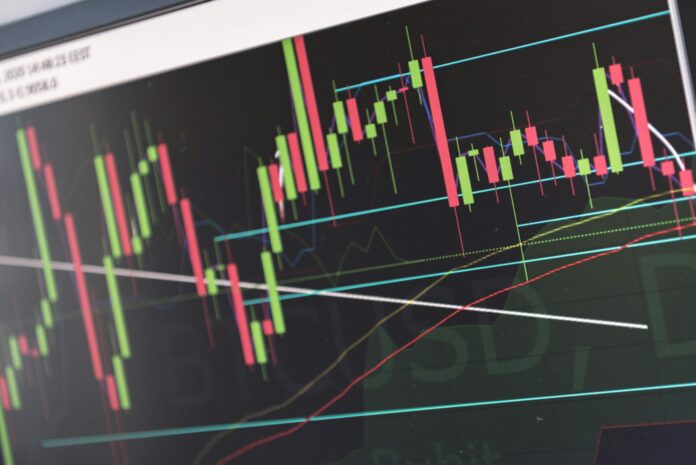
While the Polymarket wallets were cashing out, the broader market was bleeding. Bitcoin dropped as much as 3.8 per cent to $63,038 in Saturday trading — its lowest since the February 5 crash — before stabilising around $64,000, Bloomberg reported. From the week’s high near $70,000, the drawdown was closer to 10 per cent. Ether dropped 4.5 per cent to $1,836. Roughly $128 billion in total crypto market value evaporated within an hour, according to CoinGecko data. CoinGlass put 24-hour liquidations at $515 million across 152,275 traders. The largest single liquidation was an $11.17 million BTCUSDT position on Aster.
The sell-off was not retail panic. Coinpedia reported that major platforms — Binance, Bybit, Bitfinex, Kraken, Coinbase — saw roughly $5 billion in BTC outflows within 30 minutes, with market makers Wintermute and FalconX among the sellers. That is coordinated institutional de-risking, and it triggered the cascading liquidations that wiped out leveraged longs in the same pattern crypto traders have seen repeatedly this year. If the Strait of Hormuz — which handles roughly 20 per cent of global oil flows — becomes part of this conflict, analysts warn BTC could retest the $60,000 floor that barely held three weeks ago.
Plan Accordingly
Here is where things stand. Prediction markets just processed half a billion dollars in bets on whether America would bomb another country. Some of those bets were placed by wallets that did not exist 24 hours earlier. The platforms hosting these markets either cannot or will not verify who is trading. And the regulatory framework to address any of it is still being drafted while the trades are already settling.
The Torres bill is a start. Kalshi’s enforcement is a start. But the gap between a $20,000 fine for a MrBeast editor and $1 million in untouched profits from a war bet is the gap that defines this entire industry right now. If you are trading on these platforms, you are not just betting against other traders — you might be betting against someone who already knows the answer. That is not alpha. That is a rigged table.
For a complete timeline of how the Iran war reshaped global markets, see our reference page.