
Reading time: 7 min
ZEC went from $624 to $309 in two sessions after Shielded Labs admitted a counterfeiting flaw had been sitting inside Orchard since 2022. The detail nobody wants to say out loud: it took an AI model, one released the day before, to catch what human auditors never did.
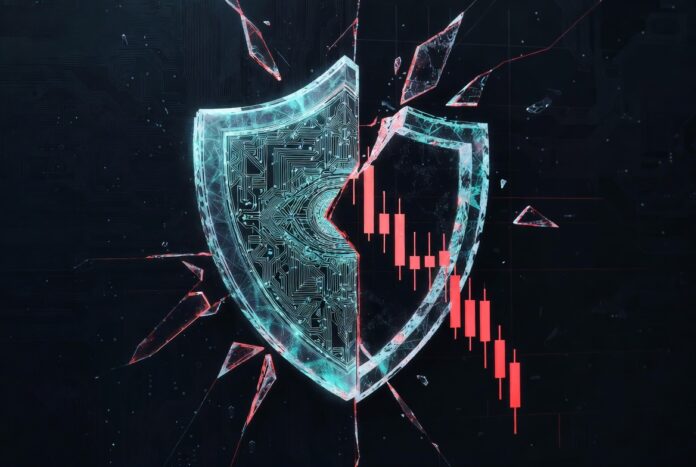
Here is the part that should keep every privacy-coin holder up at night. The bug that just cut Zcash in half was not found by a famous cryptographer poring over the Orchard circuit. It was found by a security engineer pointing Anthropic’s Opus 4.8 at the code, days after Anthropic shipped the model. The flaw had survived four years of scrutiny from some of the best zero-knowledge minds in crypto. A machine cracked it in a targeted review. Sit with that for a second.
The price action was brutal and fast. Per data from Crypto.com and CoinMarketCap, ZEC peaked near $624 on June 4, then collapsed to roughly $309 by June 5, a drawdown close to 50% in under 48 hours. As of June 6 the token has clawed back to the high $300s, with CoinMarketCap showing a 46% intraday bounce toward $385 on more than $3 billion in volume. That is not a recovery yet. That is a token trying to figure out what it is worth now that the story has changed.
The Part Nobody Read
Shielded Labs, the nonprofit that funds Zcash development, disclosed the whole thing on June 5. The vulnerability lived in two lines of code inside the Orchard Action circuit, the cryptographic engine behind Zcash’s shielded transactions. According to the disclosure, an under-constrained element allowed invalid state transitions, which in plain terms means an attacker could have minted unlimited counterfeit ZEC inside the shielded pool with no on-chain signature and no way to detect it after the fact.
The flaw was present from Orchard’s activation in May 2022 until developers closed it in an emergency upgrade in early June 2026. Four years. And here is the line from the disclosure that matters most: there is no cryptographic way to know whether it was ever exploited. The Zcash Foundation says it found no evidence of exploitation, no unauthorized value creation, and the network’s turnstile accounting confirmed the total ZEC supply was never inflated. That is genuinely reassuring on the supply level. But “we found no evidence” and “we can prove it never happened” are not the same sentence, and the market knows the difference.
An AI Did the Thing Humans Couldn’t
This is the angle that should reframe the entire story. Security researcher Taylor Hornby, hired by Shielded Labs in April specifically to hunt protocol vulnerabilities, found the bug on May 29 using a custom auditing framework paired with Opus 4.8, which Anthropic released on May 28. Zcash founder Zooko Wilcox confirmed the details on X. Per the disclosure and reporting from Unchained, Hornby then wrote a complete working exploit that generated unlimited counterfeit ZEC in a local test environment. Run on mainnet, it would have done the same thing for real.
Let that land. The Orchard circuit was audited. It was reviewed by elite cryptographers. It shipped, ran for four years, and held one of the most-watched privacy systems in crypto. None of them caught this. A targeted AI review caught it in a matter of days. Whatever you think about the ZEC price, that is the actual headline, and it does not just apply to Zcash. Every zk-proof system, every privacy chain, every rollup leaning on circuits nobody can fully verify by eye just got a very loud warning about what the new audit baseline looks like.
Helius CEO Mert Mumtaz argued on X that this should read as bullish, not bearish, since the team used advanced AI red-teaming and coordinated a patch before anyone got hurt. He is not wrong on the process. The response was, by normal security standards, excellent. The problem is that markets do not price process. They price doubt.
The Emergency Fork Nobody Got to Enjoy
The repair was a two-stage scramble. On June 2, around 02:00 UTC, a soft fork activated at block 3,363,426 and disabled all Orchard transactions network-wide. On June 3, the NU6.2 hard fork landed at block 3,364,600, fixed the circuit, and re-enabled Orchard. ZODL founder Josh Swihart called it the most ambitious network upgrade in Zcash’s history, citing the number of parties, exchanges, and node operators coordinated under a confidential timeline.
And for a moment the market liked it. ZEC actually rose on the fix, climbing past $600 by June 3 and peaking at $624 on June 4. Then someone important walked out the door.
When Arthur Hayes Walks, People Notice
Arthur Hayes, chief investment officer of Maelstrom and co-founder of BitMEX, dumped his entire ZEC position intraday on June 4. His reasoning was blunt: the incident undermined his confidence in ZEC’s supply integrity, and “the 30% dump made me rethink, and I had to take profit on the entire position.” He left the door open to buying back, hopefully lower, if his concerns prove unfounded. When a name like that exits at the exact moment confidence is fragile, it stops being one trader’s decision and becomes a signal.
The damage was concentrated and visible. Arkham flagged one large investor who lost over half the value of a $174 million ZEC stash. Per CoinDesk, bearish bets hit a record high as open interest in ZEC futures climbed to an all-time peak in token terms, with traders crowding the short side. Crucially, liquidations were small relative to the size of the drop, which points to spot selling rather than a leverage cascade. People were not getting forced out. They were choosing to leave. That is a worse signal for a token than a liquidation wipeout, because it reflects conviction, not mechanics.
This Already Happened Once
Take the recovery talk as directional, not definitive, because Zcash has been here before. As trader Udi Wertheimer reminded everyone on X, this is not the first counterfeiting-class bug in Zcash’s history. The last one was disclosed after sitting in the wild for over a year, faith evaporated, and the token spent years in the wilderness before a new generation of buyers, who mostly did not know the history, rediscovered it. That is the bear case in one paragraph, and it is why the bounce off $309 should be treated with suspicion rather than relief.
The wider backdrop does not help. Crypto is grinding through its worst week since July 2024, with bitcoin slumping toward the low $60,000s as capital rotates into AI infrastructure, the same narrative Michael Saylor leaned on to explain why Strategy finally broke its never-sell rule and offloaded bitcoin. ZEC’s crash did not happen in a vacuum. It happened while the whole risk basket was already bleeding and the dollar was catching a bid, the same macro setup that has been squeezing everything from equities to commodities and feeding through to central bank policy decisions on both sides of the Atlantic.
So What Now
Shielded Labs is already proposing the next move: a follow-up network upgrade that would deploy a new shielded pool and enforce turnstile accounting on every coin leaving Orchard, so that anyone could independently verify the integrity of the ZEC supply. That is the right fix. It directly attacks the one thing the market cannot currently confirm. If it ships and holds, the “we can’t prove it wasn’t exploited” cloud lifts, and the privacy narrative that drove ZEC up more than 700% from its September low has room to rebuild.
But that is a future tense. Right now, prediction markets are pricing the damage in real time. Per Finbold’s read of Polymarket data, the odds of ZEC falling below $100 in 2026 sat at 28% on June 5, actually down 19 points on the day, which tells you the panic peaked and is fading rather than building. The market is pricing a survivable scare, not an extinction event.
The honest read is – The supply is almost certainly fine. The fix was fast and competent. And none of that is the point. The point is that an AI model just did in days what four years of human audits could not, and it did it to the flagship of the privacy sector. If you are long ZEC here, you are betting that competence and turnstile math beat fear and history. Watch the new pool proposal, watch whether shielded volume comes back, and watch whether Hayes buys back the bottom. Set your alerts.