


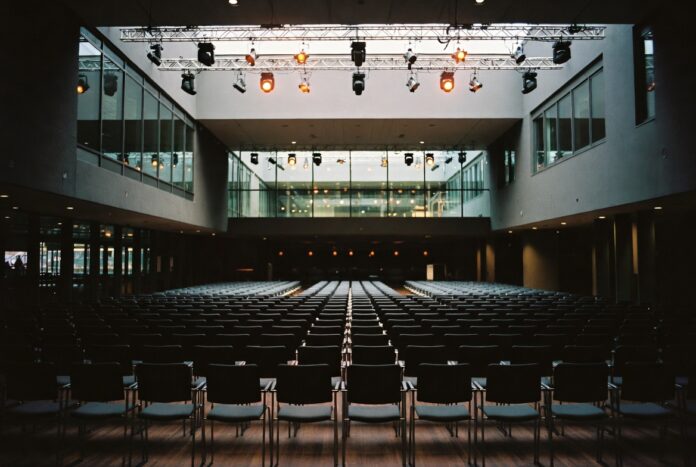
September 16 and 17 in Düsseldorf. Two days, three co-located summits, and a programme that has been constructed around a specific convergence that German finance and accounting departments are navigating in real time: the end of SAP ECC mainstream maintenance approaching in 2027, the rollout of mandatory e-invoicing for small and medium enterprises, and the first full ESG reporting cycle under European Sustainability Reporting Standards. The Accounting, Controlling and Finance Summit, organised by Trailblazer Summits and taking place at the Maritim Hotel Düsseldorf, is the annual gathering where these pressures meet practitioners with the decision-making authority to act on them.
Finonity is a media partner of the Accounting, Controlling and Finance Summit 2026.
The event has been running annually since 2021 and has built its audience around a specific segment of the finance professional community: the people inside German-speaking companies who actually implement change rather than commission it. The speaker list across the Accounting Summit, Controlling Summit and Finance Summit main stages includes practitioners from Bauer Media Group, Villeroy and Boch, trans-o-flex, KAEFER Deutschland, Peek and Cloppenburg, Schüco, ZIM Aircraft Seating, Everphone, Montblanc and W. Spitzner Arzneimittelfabrik. These are not consultants describing transformation. They are finance and controlling professionals describing what is happening inside operating companies, what worked, what was underestimated, and what they would do differently. That distinction matters in a conference format where the value comes from peer learning rather than keynote inspiration.
The SAP Migration Nobody Has Finished
In 2026, the majority of mid-to-large German enterprises are somewhere in the middle of a migration from SAP ECC to S/4HANA, with extended mainstream maintenance ending in 2027 and additional maintenance costs already rising for companies that have delayed. The Accounting and Controlling Summit programme addresses this directly through sessions on leveraging the ECC to S/4HANA transition for real-time cost accounting, event-based postings and integrated plan-versus-actual analyses. The framing is important: these sessions are not positioned as project management advice for the migration itself. They are positioned as a question of what finance functions should get from the migration that they did not have before, specifically real-time visibility that changes how controlling operates rather than a more expensive version of what already existed.
One of the confirmed keynotes on day two addresses this theme directly: Franziska Borghardt, who leads finance transformation at Getec, presents on the experience of introducing S/4HANA in finance, sharing what was actually done, what was underestimated, and which learnings can already be clearly articulated from an ongoing transformation. The framing is important. The session is not a finished case study. They are learning from processes that are still running, with all the uncertainty that involves. For finance directors and heads of controlling at German Mittelstand companies who are currently in the middle of their own S/4HANA programmes and are not hearing honest assessments of difficulty from implementation partners, peer testimony from practitioners at comparable companies is more useful than any case study. For the broader technology and market context in which this infrastructure investment is happening, risk asset positioning across global markets reflects the same AI-driven investment cycle that is reshaping enterprise software procurement alongside memory and data centre infrastructure.
The E-Invoicing Deadline That Is Actually This Year
ViDA, the EU’s VAT in the Digital Age regulation, has been enacted, and Germany is rolling out mandatory B2B e-invoicing under the EN 16931 and Peppol standards. For large enterprises the obligation is already active. For small and medium enterprises, 2026 is the implementation year, with the trajectory toward full compliance extending to 2027 and 2028. The Accounting Summit programme covers e-invoicing in the context of both technical implementation and the broader digitisation of the accounts payable function, from incoming invoice processing through OCR technology to the compliance requirements around structured invoice formats.
Ana Luisa Becker from Montblanc and Kevin Prehn from Ehrhardt und Partner are among the confirmed speakers addressing this track. The SME implementation angle is particularly relevant for the Accounting Summit audience, which draws heavily from finance teams at mid-market companies that have the obligation but not always the in-house resources to navigate it without peer input. The event format, combining exhibition booths from solution providers with practitioner-led stage sessions, creates the specific environment where a head of accounting can hear how a peer at a comparable company implemented e-invoicing and then speak directly with the technology providers who facilitated it in the same afternoon.
ESG as a Finance Function Accountability, Not a Reporting Obligation
The Accounting and Controlling Summit programme addresses ESG at a level of operational specificity that distinguishes it from the strategy-level ESG discussions that dominated conference agendas in 2023 and 2024. After the first ESRS reporting round in 2025, the 2026 focus has shifted to clean data flows, automation and auditability. That is a finance function problem. Collecting sustainability data at the frequency and granularity that ESRS requires, ensuring it can withstand the same audit scrutiny as financial data, and integrating it into the reporting systems that finance already operates are tasks that sit on the desk of the head of accounting or the CFO, not the sustainability team. Michael Goerz from Siemens Energy leads the day one ESG session, titled “Reporting Obligations and ESG: Is the New Compliance Storm Coming?”, examining how companies can proactively prepare for upcoming obligations from data collection through to strategic implementation.
The day two forecasting panel, “Rethinking Forecasting: How CFOs Plan for the Future,” includes Tim Mundhenke from Peek and Cloppenburg, Michael Ziemer from Schüco, and Carsten Gerger from Lucanet, with Antonia Frenzel from ZIM Aircraft Seating moderating. The day two no-touch accounting panel features Inanna Genthner from Thieme Group, Frank Stoltz from north.io, and Mathias Reinecke from Sage, moderated by Henrik Fröhlich from O.S. Energy, covering what true automation means across the general ledger and sub-ledgers and where RPA reaches its limits. Ralph Tübben, Vice President Finance International at Universal Pictures, described the event in his attendee review as “best in class” specifically for the breadth of content across both subject matter and participating companies. Pia Burkarth, Head of Cost Controlling at SIGNAL IDUNA Gruppe, cited the exchange with other experts as particularly valuable for gaining new perspectives and learning about best practices directly. The day two closing keynote is delivered by Ranga Yogeshwar, one of Germany’s most recognised science journalists, under the title “Next Exit to the Future,” exploring how organisations can build a genuine culture of change at a moment when the pace of innovation has no historical parallel. Day one closes with an Aftershow Lounge running until 23:00, giving attendees extended networking time with speakers and exhibitors after the formal programme ends. For context on the macroeconomic environment shaping CFO agendas across Europe this autumn, the food and energy inflation analysis published here in May traces the supply chain dynamics that are still working through to German consumer and corporate costs in Q3 and Q4 2026.
The Startup Awards and What They Signal About the Market
Each of the three summits runs a Startup Award, with attendees voting for the best three startups presenting at the event in areas including advanced reporting tools, AI-powered financial analysis, automation software for accounting processes, cloud-based accounting platforms, compliance management solutions, dashboard solutions for real-time financial data, and e-invoicing infrastructure. The inclusion of a startup track within a practitioner-led conference is a deliberate signal about the maturity of the market for finance technology in the DACH region. The companies presenting are not pitching concepts. They are pitching products that are deployable against the specific compliance deadlines and system transitions that the rest of the programme is addressing.
The tokenization session, which explores ongoing EU pilot projects until 2026 and discusses practical implementation approaches and challenges, reflects the Finance Summit’s positioning as a forward-looking conference within a practitioner-focused format. Tokenization of financial assets is no longer a purely theoretical discussion for German finance functions: several DAX-adjacent companies have participated in the ECB’s wholesale CBDC pilots and the Eurosystem’s DLT settlement experiments, and the regulatory framework under MiCA is now sufficiently established that the question for corporate treasury is implementation timing rather than whether to engage. The precious metals and commodity market context that frames treasury asset allocation decisions into year-end is equally relevant for finance leaders attending the September event.
Practical Details
The Accounting, Controlling and Finance Summit 2026 takes place on 16 and 17 September 2026. The Accounting Summit and Finance Summit are held at the Maritim Hotel Düsseldorf. The Controlling Summit takes place at Areal Böhler in Meerbusch, a separate venue with its own industrial atmosphere a short distance from the city centre. Doors open at 08:30 on day one and 09:00 on day two. The three co-located summits run concurrently with a shared main stage programme and separate specialist tracks. Early bird ticket pricing is available until 31 July 2026, after which standard prices apply. The event is organised by Trailblazer Summits GmbH, Hamburg.
Ticket registration and full programme details for the Accounting Summit are available at accountingsummit.eu. The Controlling Summit is at controllingsummit.com. The Finance Summit is at financesumm.it. Speaker applications are open through the Call for Speaker function on each event website.