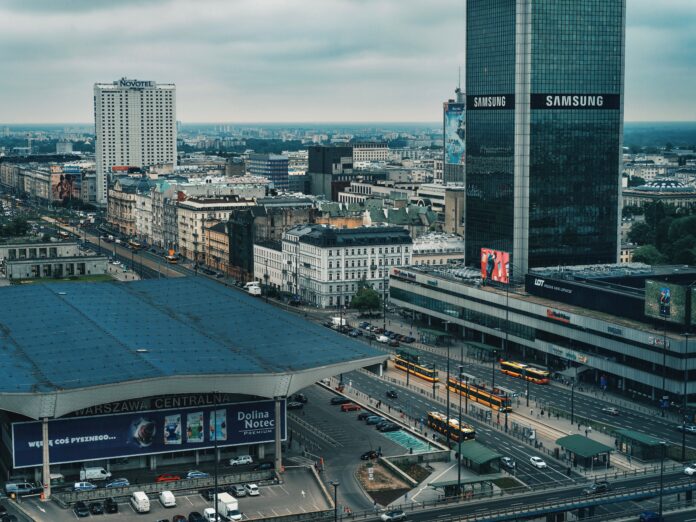
On Tuesday morning in Seoul, Samsung Electronics released preliminary Q2 2026 guidance showing operating profit of 89.4 trillion won, approximately 58.4 billion dollars, a gain of roughly 1,810 percent against the 4.68 trillion won it earned in the same quarter a year ago. It was the highest single-quarter operating profit any technology company has ever recorded, surpassing Nvidia and Apple. The Kospi closed down 7.6 percent. Samsung shares fell approximately 7 to 8 percent. SK Hynix fell sharply in the same session. The market had the numbers and decided they were not enough. That gap between result and reaction is the most important thing that happened in Asian equity markets today.
Put the result in context before addressing the reaction. Samsung’s Q1 2026 operating profit was 57.2 trillion won, itself an all-time record at the time. Q2 came in 56 percent above that figure. Revenue for Q2 reached approximately 171 trillion won, more than double the 74.57 trillion won reported in Q2 2025, though it came in slightly below the 173 trillion won some analysts had modelled, per The Next Web’s summary of sell-side estimates. DRAM prices rose approximately 44 percent quarter-on-quarter in Q2, per Citi Research. NAND prices rose 53 percent over the same period. Nomura’s semiconductor team projects further increases of 24 percent in DRAM and 25 percent in NAND for the September quarter. The demand producing these margins is not HBM alone. Citi, HSBC, and TrendForce all flagged in pre-quarter estimates that conventional DRAM and NAND prices were rising alongside premium AI memory as agentic AI workloads expanded beyond model training into inference, requiring large pools of standard memory in addition to the high-bandwidth stacks that get the headlines.
The full divisional breakdown is not available until July 30, when Samsung reports complete Q2 results. What the preliminary guidance confirms is the headline: operating profit and revenue. What it does not confirm is how much of that profit came from the chip division versus Samsung’s smartphone and display businesses, which are buying the same scarce memory at the same inflated prices Samsung charges its external customers. For the risk asset context in which this result landed, AI stocks had already been under pressure for several sessions before Tuesday’s result, with valuations across the AI hardware supply chain being re-rated on the same question the Kospi was asking in real time.
Why the Market Sold the News
The Kospi’s 7.6 percent decline and the individual share drops at both Samsung and SK Hynix were not a reading on the quality of the earnings. They were a reading on the question the earnings raise but cannot answer: whether the capital flowing into AI chips and data centres at this scale will generate enough productivity and profit to justify the investment. That question is not about Samsung’s Q2. It is about the clients buying Samsung’s memory and what they are building with it.
The concern is structural and has been building for several weeks across global markets. AI infrastructure spending by hyperscalers, the primary buyers of both HBM and conventional DRAM at today’s inflated prices, reached levels in 2025 and early 2026 that even the most bullish analyst models struggled to justify on a return-on-investment basis within a five-year horizon. When Micron reported its own record results on June 25, the stock surged 13 percent in after-hours trading and the semiconductor sector broadly rallied. Six trading days later, Samsung reports a result that makes Micron’s look modest and the sector falls sharply. The market’s read is not getting worse because the numbers are getting worse. It is getting more complicated because the numbers keep getting better and the ROI question keeps getting louder in proportion.
Samsung’s own cost structure adds a layer of complexity that the headline profit figure obscures. Following a wage agreement reached in late May that averted a major strike, the company agreed to distribute 10.5 percent of its semiconductor division’s operating profit as special bonuses to employees, per BigGo Finance and multiple Seoul-based business outlets. Analysts writing after the Tuesday release noted that stripping out those bonus provisions would have pushed the quarterly figure above 100 trillion won, per Yahoo Finance. Samsung has also announced plans to spend approximately 400 trillion won building a new semiconductor manufacturing hub in southwestern South Korea, outside the established chipmaking corridor, meaning utilities, facilities and supporting infrastructure would need to be built from the ground up. Tom Kang, director at Counterpoint Technology Market Research, flagged this to CNBC as a factor investors are weighing against the headline profit: the capital commitment is exceptional, and the site choice is unusual. Samsung’s foundry and System LSI operations are separately expected to report losses in Q2, as they have for most of the past two years, with those losses offset by memory margins at the consolidated level. June 2026 was the first profitable month for Samsung’s foundry business since 2023, according to Sammy Fans, driven by improved HBM4 base die yields on the 4nm process node and initial volume from contracts with Tesla, Groq, and reports of interest from Meta and Anthropic. One profitable month after years of foundry losses is progress. It is not a recovery. The full divisional picture on July 30 will determine whether the Kospi’s reaction to Tuesday’s headline was an overreaction or a correctly calibrated read on what the headline conceals.
The HBM Race and Where Samsung Actually Stands
The AI memory cycle that is producing these profit figures is also the cycle in which Samsung started at a competitive disadvantage that it has spent 2025 and 2026 closing. SK Hynix moved faster on HBM3E qualification with Nvidia, locking in a multi-year supply agreement that gave it the dominant position in the highest-margin segment of the memory market through most of 2025. Samsung’s HBM3E yield problems, which were widely reported through 2024 and into Q1 2025, were a significant factor in the company’s earlier earnings weakness. The preliminary Q2 guidance, and specifically the scale of the beat against consensus expectations, implies that Samsung has closed the yield gap at commercial volumes, per analysis published by Eastern Herald after the guidance release. The full July 30 report will clarify the HBM generation mix in Samsung’s Q2 output, since HBM3E commands significantly higher margins than HBM2E and the split between the two matters for how sustainable the current margin profile is.
Samsung’s own forward guidance, given to investor meetings earlier in 2026, projects HBM sales to more than triple in 2026 compared to 2025. HBM4E sampling is expected in the second half of this year, with custom variants for lead customers in 2027. Nikkei Asia reported that Samsung plans to accelerate capacity expansion as the memory shortage shows no resolution before 2027, which puts new supply at least 12 to 18 months out from affecting current pricing. The demand that produced 89.4 trillion won in operating income over three months did not emerge from a speculative cycle, per the analysis published in the Eastern Herald today. It came from AI infrastructure buildout that continues to outrun the supply of the chips it requires. That remains true regardless of how the Kospi closed on Tuesday.
The parallel with Micron’s experience in late June is exact but inverted in market terms. As covered in detail in the analysis of Micron’s 16 Strategic Customer Agreements, the US memory giant used take-or-pay contracts through 2030 to structurally insulate its revenue from the cycle that has historically destroyed memory company valuations. Samsung has no equivalent disclosed framework. Its revenue remains exposed to spot pricing dynamics in a way that Micron’s is progressively less so, and the market appears to be weighting that difference even as Samsung’s headline numbers exceed Micron’s on every comparable metric.
What SK Hynix’s 8.7 Percent Drop Means for the Nasdaq ADR
SK Hynix’s 8.7 percent decline on Tuesday carries a specific significance that goes beyond the read-across from Samsung’s results. The company is scheduled to complete its Nasdaq ADR listing on July 10, raising approximately 29.4 billion dollars through 17.79 million new shares, per the Reuters report from late June. That listing is now pricing into a market environment where the world’s dominant HBM producer just fell nearly 9 percent on the same day the world’s largest memory company reported history’s highest technology profit. The valuation gap between SK Hynix and Micron, which trades at 9.5 times forward earnings versus Hynix’s 6.97 times per Dow Jones Market Data, was meant to close through the Nasdaq listing’s expanded analyst coverage and institutional access. Tuesday’s session tested that thesis before the listing even completed.
The macro environment in which both companies are operating adds the final layer. OPEC+ increased its August production target by 188,000 barrels per day on Monday, the fifth consecutive monthly output increase, per IC Markets. Saudi Arabia simultaneously lowered its official selling prices for crude grades. Brent crude’s trajectory through the second half of 2026, with Hormuz traffic recovering and OPEC supply rising, will determine operating costs for Samsung and SK Hynix’s Korean fabs, which run on energy-intensive processes and import their power inputs at market rates. Falling energy costs would improve margins on the fab side even as memory prices remain elevated, adding a secondary tailwind to an already extraordinary profit cycle. Gold’s positioning near all-time highs through the Asian session on Tuesday, retreating only marginally before the Fed minutes release scheduled for Wednesday, reflects the same investor caution that the Kospi was expressing in equity terms: extraordinary corporate results, unresolved macro questions, and a Fed that has not yet given the all-clear.
Samsung’s Q2 result is the largest profit in technology history. The Kospi saw it and fell. Those two facts are not contradictory. They are the same market asking the same question in two different ways. The answer is not in the July 7 preliminary guidance. It is in what the companies buying 89.4 trillion won worth of memory actually build with it, and whether that builds back into the valuations the market is now reluctant to assign.
The divisional detail that will either vindicate or complicate the Kospi’s read arrives on July 30.