


Reading time: 6 min
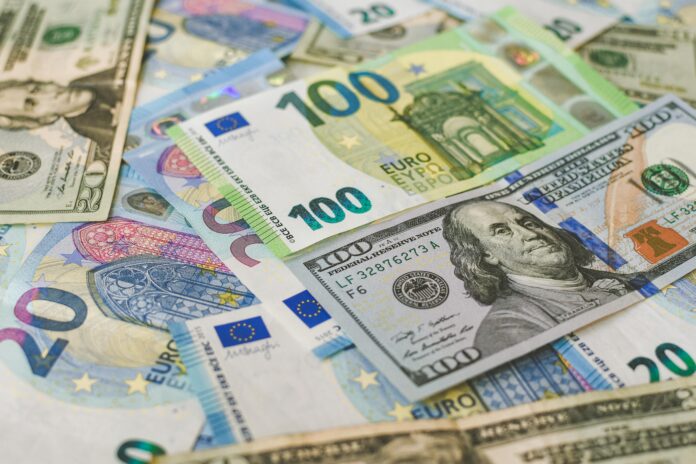
EUR/USD fell to $1.1560 on March 9, its lowest print since late November, and it did so in a way that broke a rule most FX traders have internalised over the past two decades: ECB hawkishness is supposed to be bullish for the euro. Not this time. The oil shock triggered by the US-Israeli strikes on Iran has simultaneously driven dollar safe-haven demand higher and forced markets to reprice the ECB from cuts to hikes in the span of a single week. The pair is caught between two forces pulling in opposite directions, and neither one is going away before the ECB meets on March 19.
What the Move Looked Like
EUR/USD opened February 2026 above $1.19. It had run cleanly off the January low at $1.1577, and the consensus trade was long euros on Fed-ECB divergence: the Fed cutting, the ECB on hold, rate differentials narrowing in the euro’s favour. That was the framework. Then the strait closed.
US and Israeli forces struck Iran on February 28. Brent crude surged from roughly $70 to above $103 per barrel within days, briefly touching close to $120 intraday on March 9 before retreating, per CNBC market coverage. Tanker traffic through the Strait of Hormuz, which normally carries around 20 percent of global oil supply, came to an effective halt. The session that took oil to $120 and then crashed it back to $86 in the same trading day showed exactly how much of the move was positioning and how much was genuine supply disruption. The answer matters for your EUR exposure. If the premium is mostly speculative, it fades quickly. If it’s operational, driven by refinery shutdowns, shut-in production and insurer exit from the strait, it doesn’t.
EUR/USD hit $1.156 as oil spiked. The dollar caught two bids at once: the classic energy-shock safe-haven flow, and the mechanical widening of rate differentials as US rate-cut expectations collapsed. CME FedWatch put the probability of a March Fed hold at 99.3 percent following Wednesday’s CPI print, and September is now the first meeting with meaningful cut pricing. The dollar doesn’t need new reasons to strengthen when the entire cut cycle just shifted four months to the right.
The ECB Situation Is Messier Than It Looks
Here’s the part that makes this pair genuinely difficult to trade. The same oil shock that’s strengthening the dollar is now being priced as a potential catalyst for ECB rate hikes. That should, in theory, put a floor under EUR/USD. It hasn’t, and the reason is stagflation risk.
Eurozone headline inflation came in at 1.9 percent year-on-year in February, up from 1.7 percent in January, per Eurostat’s flash estimate released March 3. Core climbed to 2.4 percent, above the 2.2 percent expected. Crucially, the February data was collected before the oil escalation. It was already printing hot on its own, driven by services inflation running at 3.4 percent annually. UBS, in a note published Monday, said markets had swung from pricing 6 to 8 basis points of cumulative ECB cuts through 2026 to pricing 32 basis points of cumulative hikes, a reversal of roughly 40 basis points in rate expectations in under a week. Per Deutsche Bank, the probability of at least one ECB hike by December is now running at 63 percent. As recently as last Friday, markets were still pricing a 55 percent chance of a cut.
ECB Chief Economist Philip Lane flagged the conflict’s duration as the decisive variable, warning in an FT interview that permanent disruptions to oil and gas supply from the Middle East could cause a substantial inflation spike and a sharp drop in eurozone output. The ECB’s own model, according to Euronews, estimates that a one-third disruption of Hormuz flows would push oil prices more than 50 percent higher toward $130 per barrel, cut eurozone growth by 0.6 percentage points below forecast, and add over 0.8 percentage points to inflation. That’s not a hawkish outcome. That’s stagflation. And central banks don’t have a clean response to stagflation. Bundesbank President Joachim Nagel, Bank of Finland Governor Olli Rehn, and ECB Vice President Luis de Guindos have all flagged concern in the past week. Banque de France Governor Villeroy has pushed back, stating there’s currently no justification for higher rates.
The ECB meets March 19 with a problem it can’t fully resolve: its staff technical assumptions for the meeting were fixed around February 20, before the escalation. UBS expects the ECB to present multiple forecast scenarios rather than a single projection, an acknowledgement that the central bank is operating with too much uncertainty to commit to a single path. That kind of language doesn’t give EUR/USD a clear directional catalyst. It gives it volatility.
The Dollar’s Position and the Levels That Matter
DXY is holding near 98.65, down about 0.5 percent on the week but still carrying monthly gains of nearly 2 percent, per IC Markets data. Trump’s Tuesday comments suggesting the war could end “very soon,” which he subsequently appeared to walk back in the same news cycle, pushed oil briefly back below $100 and trimmed the dollar’s safe-haven premium enough for EUR/USD to recover toward $1.163. That recovery tells you something about the pair’s sensitivity: it doesn’t take much de-escalation language to move it two or three figures. When oil was at $80 with Hormuz shut, the currency that didn’t react was the one that started the conflict, and the mechanism behind that divergence is still driving positioning today.
The levels to watch are straightforward. On the downside, $1.1500 is the psychological support that bears would need to clear to open the next leg lower. On the upside, the pair was trading above $1.19 before the Iran war began, and recapturing that territory would require either a credible ceasefire or a clean ECB pivot signal, neither of which looks imminent. The $1.163 to $1.173 range is where the pair likely spends the next week as the market waits for March 19.
For GBP/USD, the picture is simpler on the surface. Sterling is trading near $1.346, recovering off early-March lows, and the Bank of England announces its rate decision on March 19, the same day as the ECB. The BoE is at 3.75 percent with UK CPI running at 3.0 percent, still well above its 2 percent target. Per BusinessToday, markets are assigning roughly a 30 percent probability of a BoE rate increase by year-end, a significant shift from the 1 to 2 cuts that were priced entering 2026. Europe’s gas storage vulnerabilities, already stretched after cutting off Russian supply, mean the UK’s energy import exposure compounds the inflation pressure in a way the headline CPI number still understates. Watch the BoE’s inflation language on March 19 for a read on whether sterling can sustain the recovery through $1.35 or gives it back.
The Positioning
The market is pricing ECB hikes, Fed holds, and oil staying above $95. Whether EUR/USD can recover toward $1.18 depends entirely on which of those three legs breaks first, and right now Trump’s ceasefire timeline is the only one with a credible near-term catalyst to shift it.