Reading time: 6 min
Brent settled at $72.48 on Friday, hours before the largest US military operation since the 2003 invasion of Iraq. Oil tankers are turning around at the Strait of Hormuz. Iran’s supreme leader is confirmed dead. Gold is above $5,250. And futures open at 6 p.m. ET Sunday. If you hold anything exposed to energy, defense, or emerging markets, this is the only briefing that matters before the bell.
Let’s start with what happened, then what it means for your portfolio.
72 Hours That Changed the Map
On the morning of February 28, the United States and Israel launched coordinated strikes across Iran. Operation Roaring Lion (Israel) and Operation Epic Fury (Pentagon) hit Tehran, Isfahan, Qom, Karaj, and Kermanshah. The targets were not just nuclear sites, as in the 12-day war of June 2025. This time the list included ministries, command centres, and the personal compound of Supreme Leader Ali Khamenei.
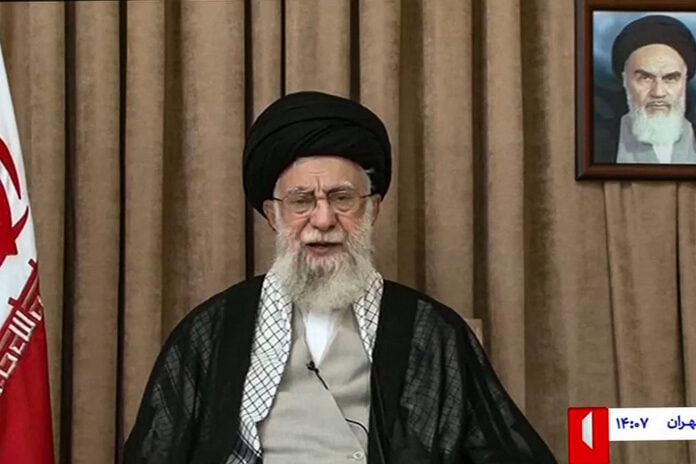
Khamenei is dead. Iranian state television confirmed it on Saturday, and Trump announced it from Mar-a-Lago. CBS News reported that at least 40 senior Iranian officials were killed, citing intelligence and military sources. Among the confirmed dead: IRGC chief of staff Abdolrahim Mousavi, intelligence head Salah Asadi, and the head of Iran’s nuclear weapons research organization (SPND), Hossein Jabal Amelian. Iran declared 40 days of national mourning. Then it started shooting back.
The Islamic Revolutionary Guard Corps announced retaliatory strikes on 27 US military bases across the Middle East and Israeli military facilities in Tel Aviv, per Al Jazeera’s live coverage on March 1. Missiles and drones hit or targeted Bahrain (including the US Navy’s Fifth Fleet headquarters in Manama), Qatar, Kuwait, the UAE, Jordan, and Saudi Arabia. CENTCOM stated it suffered no casualties and neutralized “several hundred” incoming projectiles, though it acknowledged light damage to facilities. Saudi Arabia condemned the Iranian strikes as a breach of sovereignty. The US Embassy in Bahrain closed for Sunday. Trump, speaking Saturday evening, said bombing would “continue, uninterrupted throughout the week or, as long as necessary.”
This is not June 2025. That was a 12-day operation with defined objectives (nuclear sites) and a ceasefire. This looks more like the opening chapter of something longer.
Hormuz: The Only Number That Matters
Here is why this isn’t just geopolitics. Oil was already pricing in conflict risk heading into Friday, with Brent settling at $72.48 (up 2.45%) and WTI at $67.02 (up 2.78%), per CNBC. Those numbers are about to look quaint.
Bloomberg reported Saturday that oil shipping through the Strait of Hormuz has “largely paused.” A European Union naval mission official told Reuters that vessels in the region received VHF radio transmissions from Iran’s Revolutionary Guard stating that “no ship is allowed to pass the Strait of Hormuz.” Iran has not formally confirmed the closure. But tankers are turning around anyway. Several oil companies and trading firms have suspended shipments, according to Reuters trading sources. At least 17 tankers continued transit, but the direction is clear: insurers are reassessing, and captains are waiting.
The arithmetic is brutal. Roughly 20 million barrels per day of crude and refined products pass through Hormuz, or about 20% of global oil consumption, according to the US Energy Information Administration. A further 20% of global LNG trade transits the same waterway, most of it from Qatar. Bob McNally, founder of Rapidan Energy and a former White House energy advisor, told CNBC the market is “underestimating the threat” and that if Iran attempts to make Hormuz unsafe for commercial traffic, prices could spike above $100 a barrel. “A prolonged closure of the Strait of Hormuz is a guaranteed global recession,” he said.
Tom Kloza at Kloza Advisors framed it differently. “The attack by Iran on other neighbors in the Persian Gulf changes the calculus,” he told CNBC, noting that insurers may “aggressively raise tanker rates for Strait of Hormuz travel or balk at underwriting any traffic.” Even without a formal blockade, insurance paralysis alone can halt shipping for days.
What Opens Where on Monday
Crude futures resume trading at 6 p.m. ET Sunday. McNally expects Brent to gap up $5 to $7 immediately. If Hormuz remains contested through Sunday, that number gets bigger. If Iran mines the waterway or fires on commercial shipping, we are looking at $80+ Brent within the session and potentially triple digits within the week.
Alicia Garcia-Herrero, chief economist for Asia-Pacific at Natixis, expects a “rough and risk-off” equity open on Monday, with global stocks potentially down 1% to 2%, Treasury yields falling 5 to 10 basis points, and oil jumping 5% to 10%, as she told CNBC. David Roche at Quantum Strategy offered the scenario that matters: if the conflict is short, the spike is brief. If it becomes a three-to-five-week “regime change endeavor,” markets react “rather badly” as investors price in sustained oil disruption.
The Friday session already showed cracks. The Dow fell 1.3%, the S&P 500 dropped 0.4%, and the Nasdaq slid nearly 1%. That was before Khamenei’s death was confirmed, before the Hormuz disruption reports, before Iran launched missiles at six countries. Monday will reprice all of it at once.
Gold is trading around $5,246 to $5,278 per ounce, up roughly 7% to 10% for February alone. Precious metals were already flashing safe-haven demand before the first bomb dropped. Silver gained over 6% in a single session last week. If you’re not holding some allocation to hard assets right now, Monday is going to remind you why the position exists.
The Variable Nobody Can Price
Iran’s leadership is decapitated but not its military. The IRGC has 190,000 active personnel, a fleet of fast-attack boats designed for asymmetric warfare in narrow waterways, and stockpiles of naval mines and short-range missiles positioned along the entire northern coastline of Hormuz. The June 2025 war ended after 12 days because both sides had defined objectives and a ceasefire framework. This time, Trump said operations continue “as long as necessary” and there is no ceasefire channel in sight.
Kevin Book, managing director at ClearView Energy Partners, told clients in a Saturday note: “In supply crises, duration matters. Scale does, too.” The Trump administration could tap the Strategic Petroleum Reserve’s 415 million barrels, but SPR releases are measured in days and weeks. If Hormuz stays contested for a month, no reserve covers the gap.
The UN Security Council held an emergency session Saturday. Guterres called the strikes “a grave threat to international peace and security.” Russia requested a special IAEA Board of Governors session before the regular meeting on Monday. Oman’s foreign minister urged the US to “not get sucked in further.” None of this provides a trading signal. But it tells you that nobody with leverage over either side is signaling de-escalation.
Position accordingly. If you’re long equities with no energy or gold hedge, Monday’s open is going to be expensive. If you’re already hedged, let the gap do its work and don’t chase. The only certainty right now is that the premium was underpriced on Friday at $72.48 Brent, and the market will spend all of next week figuring out how much higher it belongs. Watch Hormuz. Everything else is noise.