


Reading time: 7 min
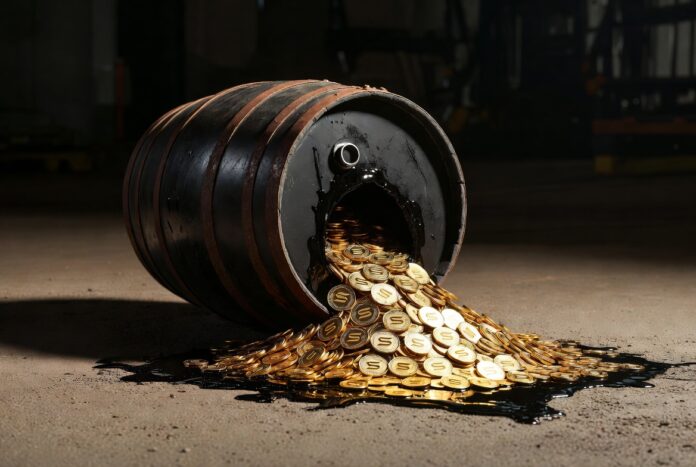
USOR launched on Solana in early January 2026 with a pitch that sounded too good to ignore: tokenized exposure to U.S. oil reserves, on-chain transparency, and a fixed supply of one billion tokens. The website referenced “gov-verified reserves” and “Federal custody.” Within two weeks the token surged over 400,000 percent from its low, hit a market cap above $55 million, and attracted over 110,000 holders. Then the February 1 “tokenization rollout” deadline passed without any verifiable link to physical oil. The price collapsed 90 percent. The treasury turned out to be BTCB, ETH, XRP, ADA, and SOL. Not a single barrel of crude.
What USOR Claims to Be
According to its official website (usor.tech), the U.S. Oil Reserve token presents itself as “America’s Oil Reserve for the Digital Age.” The project describes a Solana-based SPL token designed to tokenize U.S. oil reserves and bring transparency to the reserve management process through blockchain. The site references real-time dashboards showing token supply (1 billion fixed), circulating supply (approximately 701 million as of late January), a reserve wallet balance, and liquidity figures. The framing borrows directly from the real-world asset (RWA) tokenization trend that saw global RWA market capitalization approach $24 billion in January 2026, according to BingX research.
The problem is that none of the core claims withstand basic verification. The U.S. Department of Energy, which manages the actual Strategic Petroleum Reserve, has issued no confirmation of any relationship with the USOR project. There is no third-party audit. There is no custodian. The “reserve” dashboard tracks token allocations on Solana, not barrels of oil in salt caverns along the Gulf Coast. As 99Bitcoins put it in its January review: the claims are “unverified and false.” CoinCodex classified it as a “speculative meme asset.” CCN found that wallet labels connecting USOR to BlackRock and “Trump Team” were based on heuristic tagging, not official disclosures. The broader crypto market was already fragile when USOR launched, and the token fed directly into the speculative cycle that defines Solana meme culture.
The Price Action That Should Have Been the Warning
USOR traded on Solana DEXs including Meteora, Orca, Jupiter, and Raydium. It peaked above $0.04 with daily turnover approaching $20 million, per Compass Investment analysis on Medium. The surge coincided with reports about Washington’s realization of seized Venezuelan oil assets, which gave the “U.S. oil” narrative a superficially plausible news hook. Crypto social media amplified the story. Giveaways, hype posts, and influencer endorsements drove retail buying. The same sentiment dynamics that drove speculative crypto rallies were at work, but compressed into a token with no fundamental floor.
By early February, the token had crashed to $0.0076, a 90.89 percent decline from its all-time high set just thirteen days earlier. BingX documented that the February 1 “tokenization rollout” produced nothing verifiable. Trading volume remained abnormally high at $3.85 million against a $7.64 million market cap, a volume-to-cap ratio of over 50 percent. That ratio signals a token in liquidation mode: long-term holders exiting while day traders flip the remaining volatility. Broader markets were already under stress from broader macro conditions, and USOR became another casualty of the gap between narrative and reality.
Why Oil Tokenization Keeps Failing
USOR is not the first attempt to bring oil exposure onto a blockchain and it will not be the last. The appeal is obvious: crude oil is the most traded commodity on earth, futures contracts are complex and capital-intensive, and most retail investors have no practical way to get direct exposure without going through ETFs, CFDs, or managed funds. A token that genuinely represented a fractional claim on physical oil, with proper custody, auditing, and legal structure, would fill a real gap in the market.
But that is precisely what makes the space attractive to projects that substitute marketing for infrastructure. Tokenizing a physical commodity requires a custodian who actually holds the commodity, a legal framework that gives token holders enforceable rights, regulatory compliance in every jurisdiction where the token trades, and independent audits that verify the reserve on a regular schedule. USOR had none of these. Its treasury was composed entirely of other cryptocurrencies. The “reserve” existed only as a wallet balance of its own tokens. Energy markets are volatile enough without layering crypto speculation on top of unverified claims about physical backing.
The Solana Meme Machine
USOR traded on Meteora, the same Solana platform where the TRUMP meme coin launched. That detail alone tells you the market this token was designed for. Solana’s low fees and fast transaction speeds make it the preferred chain for meme tokens that rely on rapid trading volume and social media momentum rather than utility or fundamentals. The ecosystem produces dozens of narrative-driven tokens per week, most of which lose 80 to 95 percent of their value within 30 days of peak hype.
What made USOR different was the sophistication of its positioning. Most meme tokens are transparent about being memes. USOR borrowed the language and aesthetics of legitimate RWA projects, created dashboards that looked like institutional-grade monitoring tools, and referenced government reserves in language that implied official endorsement. Financial regulation is still catching up to this kind of gray-zone marketing where nothing is technically illegal but the impression created is deliberately misleading.
What the Iran War Did to Oil Narratives
USOR launched in early January 2026, weeks before the U.S. and Israeli strikes on Iran that began on February 28. The war sent Brent above $115 and closed the Strait of Hormuz to commercial tanker traffic. In a rational market, a token claiming exposure to U.S. oil reserves would have surged on the back of the biggest oil supply disruption since 1973. USOR did not. By the time the war began, the token had already collapsed because the market had figured out there was nothing behind it.
The irony is instructive. Brent posted its steepest monthly gain in recorded history in March 2026. Physical oil traders made fortunes. ETF investors in USO and BNO saw substantial returns. Even the gold market, despite its own complications, responded to the geopolitical shock. USOR, the token that was supposed to give retail traders “on-chain exposure to real-world oil,” was trading at a fraction of a cent while actual oil markets were making history. The narrative collapsed because narratives without backing always do when the underlying asset starts moving for real.
Lessons for Crypto Investors
The USOR episode reinforces several principles that experienced crypto traders already know but that new entrants learn the hard way. First, claims of real-world asset backing require real-world verification. If a project cannot name its custodian, produce an independent audit, or demonstrate a legal structure that gives token holders enforceable claims, the “backing” is marketing copy. Second, dashboard aesthetics are not evidence. Any developer can build a website that looks like an institutional monitoring platform. Third, timing a narrative is not the same as investing in fundamentals. The traders who bought USOR early and sold within the first two weeks made money. Everyone else is underwater. Bitcoin maintains its value over time because of network effects, scarcity, and institutional adoption. Meme tokens maintain their value only as long as attention holds, and attention on the internet is the most ephemeral resource there is.
The RWA tokenization trend itself is not a scam. Projects like Ondo Finance (tokenized treasuries), Maple Finance (institutional lending), and Centrifuge (real-world credit) operate with proper legal structures, audits, and custodial arrangements. The problem is that for every legitimate RWA project, a dozen USOR-style tokens emerge to exploit the same narrative without doing any of the work. XRP’s own journey through regulatory scrutiny demonstrates how difficult it is to build a compliant digital asset even with billions of dollars and years of legal effort. A token launched on Meteora with no team transparency and unverified oil claims was never going to bridge that gap.
For investors seeking actual exposure to oil price movements in 2026, the options remain what they have always been: Brent crude futures and CFDs, oil ETFs like USO and BNO, or equity positions in producers like ExxonMobil and Chevron. These instruments are regulated, transparent, and tied to barrels that exist in the physical world. USOR offered a story about oil on a blockchain. The market priced it accordingly.