


Reading time: 5 min
Brent closed Tuesday at $103.42. WTI at $96.21. Those are the numbers that move across tickers and get quoted in headlines. They are not the number that actually tells you what is happening. On March 12, the premium for a physical cargo of Middle East benchmark Dubai crude over its paper equivalent rose to $37.87 per barrel, per Reuters columnist Clyde Russell. That is the highest since Russia’s 2022 invasion of Ukraine. In 2022, supply was not actually disappearing — it was just being rerouted to China and India. That is not what is happening this time.
Tuesday’s Move
Trump posted on Truth Social that NATO allies “do not want to participate” in US operations against Iran, adding that the United States does not need their help. The post landed while markets were already sensitive. Brent had spent Monday falling nearly 3 percent to $100.21 as some traders bet on a diplomatic resolution. Those bets reversed fast on Tuesday, with Brent gaining 3.2 percent and WTI up 2.9 percent. ING’s Warren Patterson, head of commodities strategy, told CNBC that the sheer scale of the disruption makes it difficult for the market to find an adequate solution and that escorting commercial vessels through the strait would expose naval ships to Iranian attack, meaning the US may hold off until Iran’s targeting capability has been degraded.
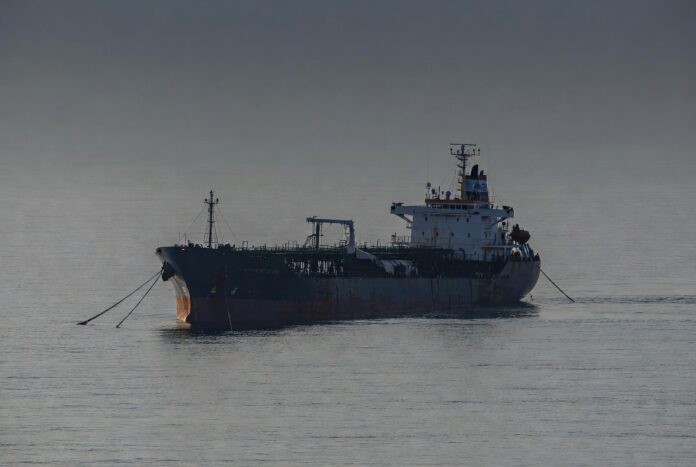
One data point ran against the prevailing direction. MarineTraffic confirmed on Monday March 16 that the Aframax tanker Karachi, carrying Abu Dhabi’s Das crude, transited Hormuz with its AIS transponder broadcasting. The first non-Iranian cargo to do so since the closure began. The pre-war average was 24 vessel transits per day. Brent first closed above $100 last week for the first time since August 2022. One tanker is not a reopening.
Why the Physical Market Is the Real Story
The Russell column in Reuters is worth understanding carefully. Paper futures prices price probabilities and expectations. Physical crude prices in the cash market price the actual availability of barrels for immediate delivery. When those two numbers diverge by nearly $38, it means the paper market is pricing in a resolution the physical market has stopped believing. On March 12, the day Russell published his analysis, Brent futures closed at $91.98. Buyers of actual cargoes were paying as though it were $130.
The underlying numbers explain why. Goldman Sachs estimated that tanker traffic through the Strait had fallen to roughly 10 percent of normal levels, temporarily removing about 18 percent of global oil supply from the market. Kpler data shows approximately 13 million barrels per day passed through the strait in 2025, accounting for 31 percent of all seaborne crude flows. Gulf Arab producers are not merely losing export routes. They are losing storage. Kuwait announced precautionary production cuts. Iraq’s three main southern oilfields dropped from 4.3 million barrels per day to 1.3 million, a 70 percent fall, per three industry officials cited by Reuters. The UAE is managing offshore output against onshore tank limits. The IEA’s own March report put total Gulf production cuts at roughly 10 million barrels per day, against an emergency release of 400 million barrels coordinated across more than 30 countries. The US SPR component alone takes 120 days to complete. It is a slow drip against a fast drain.
The Price Record Since February 27
Brent was at approximately $70 per barrel when Operation Epic Fury began. By March 9 it had touched $119 intraday, the highest level in nearly four years. It pulled back sharply on March 10 when Trump suggested the war might end within days. Those signals proved premature, and prices recovered. The week ending March 13 saw Brent close at $103.14 and WTI at $98.71. The weekly gain was roughly 10 percent, following the prior week’s 27.9 percent surge, the biggest weekly move in oil since the COVID pandemic in 2020. Trough to peak, the move covered $49 per barrel in under two weeks. Amjad Bseisu, CEO of EnQuest, told CNBC’s Squawk Box Europe that the only comparable historical precedent for the speed of a supply shock of this scale is the Arab embargo of 1973.
Mizuho Bank puts the war premium embedded in current prices at $5 to $15 per barrel through shipping insurance costs alone. That premium does not disappear when Hormuz reopens. Insurance resets slowly. Operators who have had vessels struck or threatened will price risk differently for the rest of the year regardless of when the conflict formally ends.
Where the Forecasters Stand
The EIA revised its 2026 Brent average forecast to $79 per barrel from $58 per barrel one month ago, assuming the disruption is temporary and tanker traffic gradually normalises. Rystad Energy’s Janiv Shah places Brent at $110 if current conditions persist for two months and $135 at four months. Wood Mackenzie told clients last week that $150 in the coming weeks is possible, and described $200 as not outside the realms of possibility given the dimensional scale of supply at risk. Goldman Sachs warned that if demand destruction territory is reached, prices may need to rise faster than historical models suggest to rebalance supply, and their Q2 TTF gas forecast for Europe sits at approximately $22 per MMBtu on Qatar LNG outage risk.
Every forecast shares the same load-bearing assumption: the war ends relatively quickly and shipping eventually normalises. That assumption is doing a lot of work. When Brent touched $120 and crashed to $86 in a single session, the paper market was repricing Trump commentary in real time, not oil fundamentals. That dynamic has not ended. The FOMC is meeting today and tomorrow. The ECB and Bank of England both decide Thursday. None of them has finished modelling what a closed Hormuz costs over three or four months. The physical market already has an answer. It is just not one the futures strip is willing to print yet.
For a complete timeline of how the Iran war reshaped global markets, see our reference page.