
Reading time: 7 min
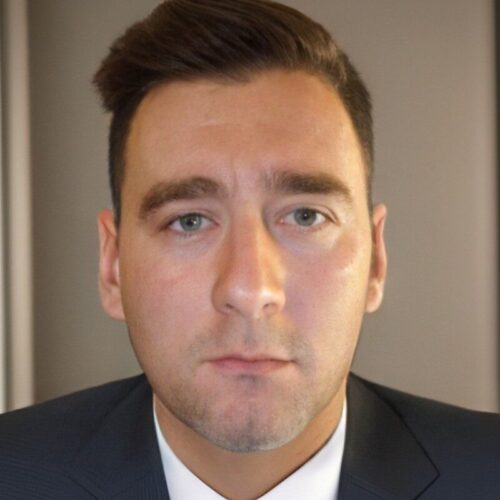
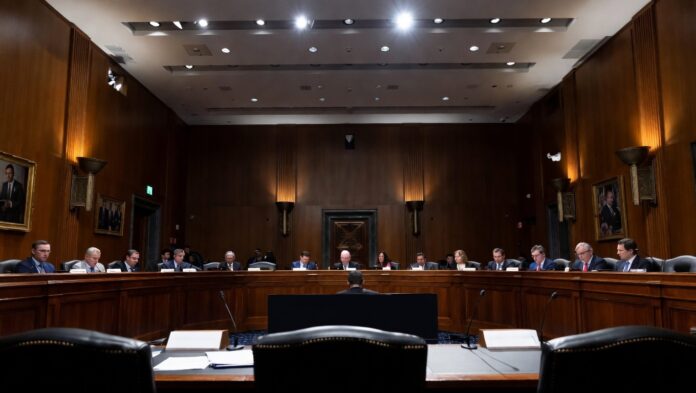
Kevin Warsh, President Donald Trump’s nominee to serve as the next chair of the Federal Reserve, testified on April 21, 2026, before the Senate Banking Committee in a confirmation hearing that devolved into the most adversarial vetting of a Fed chair candidate in the institution’s 113-year history. The hearing produced no path to a vote before current Chair Jerome Powell’s last day on May 15, exposed more than $100 million in undisclosed financial holdings, and ended with a Republican senator, not a Democrat, blocking the nomination from advancing.
The procedural obstacle is as significant as any policy disagreement aired in the hearing room. Senator Thom Tillis of North Carolina, a Republican on the committee where the party holds a 12-10 advantage, stated that he would block the nomination from leaving committee until the Department of Justice drops its criminal investigation of Powell. That probe, pursued by Jeanine Pirro, the United States Attorney for the District of Columbia, centres on cost overruns in the renovation of the Fed’s headquarters. In March, Federal District Court Judge James Boasberg quashed grand jury subpoenas issued to Powell, writing that their “dominant purpose” was “to harass and pressure Powell either to yield to the president or to resign.” On April 3, Boasberg denied a motion to reconsider, starting a 30-day window for the government to file a notice of appeal. Tillis’s position means a single Republican objection is sufficient to prevent a committee vote, and he made clear that his quarrel is with the investigation, not with the nominee.
The Independence Question
The core confrontation, across nearly three hours of testimony, was over whether Warsh would function as an independent central banker or as an instrument of presidential interest-rate policy. The framing was not hypothetical. In December 2025, Trump posted what he called “THE TRUMP RULE” on Truth Social, writing that he wanted his next Fed Chairman to lower interest rates and that anyone who disagreed would never hold the position. At the Alfalfa Club dinner in January, per CNN, the president reportedly joked that he would sue Warsh if he did not reduce borrowing costs.
Warsh’s response, delivered to the committee in prepared remarks and reiterated under questioning, was that “ensuring that the conduct of monetary policy remains strictly independent” is a core mission and that price stability must be pursued “without excuse or equivocation, argument or anguish.” He told senators that Trump had never asked him to commit to lower rates, nor had he offered such a commitment. Senator Elizabeth Warren, the ranking Democrat, was unconvinced. She called Warsh “uniquely ill-suited” for the position and accused Trump of attempting to install a “sock puppet” at the Fed. When Warsh attempted to lighten the exchange with a joke about Trump’s “central casting” compliment, Warren replied, “Adorable. But we need a Fed chair who is independent.”
The Financial Disclosure Problem
Warsh’s financial filings, released ahead of the hearing, disclosed personal assets of between $135 million and $226 million, with his wife Jane Lauder (an Estee Lauder heir whose personal fortune Forbes estimates at $1.9 billion) holding additional positions. The disclosures list roughly 1,800 individual assets, per CNBC reporting, including holdings in Polymarket, SpaceX, and several cryptocurrency ventures. Warsh also disclosed $10 million in income from his work as an adviser to the investor Stanley Druckenmiller.
The controversy centres on what was not disclosed. Two holdings in a vehicle called the Juggernaut Fund, linked to Druckenmiller’s Duquesne Family Office, are each listed as being worth more than $50 million without specifying an upper limit. Warsh stated that pre-existing confidentiality agreements prevent him from revealing the underlying assets. The Office of Government Ethics noted in its review that Warsh is, at present, not in compliance with ethics requirements for those holdings, though compliance would be restored upon divestiture, which Warsh has pledged to complete within 90 days of confirmation. Warren told reporters that Warsh is “the first Fed nominee not to be in compliance with ethics rules,” a characterisation confirmed by the Congressional Research Service, per a Banking Committee spokesperson.
The Policy Signals
On substance, Warsh offered a preview of what a Warsh-led Fed would look like, though in broad strokes rather than specific commitments. He called for “regime change in the conduct of policy” (a phrase, CNN noted, that echoed language Trump has used about Iran) and said the institution needed “a new framework, new tools, and new communications.” He did not specify what the new inflation framework would be. He criticised the quarterly dot plot, the anonymous interest-rate forecasts published by FOMC members, arguing that officials feel bound by projections that may no longer reflect economic reality. He suggested the Fed does not need to meet every six weeks and declined to commit to holding a press conference after every FOMC meeting, a practice Powell introduced.
The operational implication, for anyone whose quarterly positioning depends on the dot plot, is material. A Warsh Fed that communicates less frequently, eliminates the individual rate forecasts, and replaces the current inflation target with an unspecified alternative framework would represent the most significant institutional overhaul since Paul Volcker’s shift to money-supply targeting in 1979. Whether that overhaul would increase or decrease policy clarity is the disagreement that animated both sides of the hearing room.
On the dual mandate itself, Warsh made only one reference to the labour market in his prepared testimony. His emphasis, throughout, was on price stability, a posture that aligns with his public record as a Fed governor from 2006 to 2011, when he was consistently among the more hawkish voices on the board. That record, however, is complicated by his more recent signalling that AI-driven productivity gains could create space for lower rates, a view that Democrats characterised as a convenient evolution timed to align with Trump’s demands.
The Lisa Cook Question
Warsh was also pressed on the case of Governor Lisa Cook, whom Trump has attempted to remove from the Fed board. The case is currently before the Supreme Court, and Powell attended oral arguments in person, later telling reporters he considered it “perhaps the most important legal case in the Fed’s 113-year history.” Senator Angela Alsobrooks of Maryland asked Warsh directly whether he would defend Cook. He declined, citing the pending case. When Alsobrooks referenced Justice Brett Kavanaugh’s observation during oral arguments that allowing the firing to proceed “would weaken if not shatter” the Fed’s independence, Warsh’s response was: “What I can say is Fed independence means everything to me.”
The Cook case, combined with the Powell investigation and the confirmation blockade, creates a constitutional overlap that is without precedent in the Fed’s modern history. The Supreme Court has already reshaped the executive branch’s economic authority once this year, when its IEEPA ruling returned tariff power to Congress. A ruling in the Cook case that permits the president to remove Fed governors at will would restructure the central bank’s independence on a timeline that could overlap with Warsh’s own chairmanship.
What Markets Heard
The Dow Jones Industrial Average fell 132 points on Tuesday. The S&P 500 and Nasdaq each dropped roughly 0.4 percent, pausing a rally that had taken both indices to record highs the previous week. The sell-off was modest and reflected a combination of factors, including uncertainty over whether Iran would attend the next round of peace talks, rather than anything Warsh said in the hearing. But the market is now pricing a structural shift at the top of the institution that sets the price of money, and the practical implications of that shift remain undefined.
The Fed entered 2026 unable to cut, unable to hike, and unable to explain why. March CPI jumped to 3.3 percent, driven almost entirely by a 19 percent year-on-year surge in gasoline, while core inflation came in below expectations. The labour market added 178,000 jobs in March but the three-month moving average of payroll gains has fallen to 68,000, per IBKR data. Consumer confidence has already dropped below the level that preceded every recession since 1978. The next chair inherits an economy where the supply-side inflation from the Hormuz shock is layered on top of a labour market that is decelerating without officially contracting.
Warsh will likely be confirmed, eventually. The Republican majority in the full Senate is comfortable, and Tillis’s objection is procedural, not substantive. But the timeline is now measured in weeks or months, not days, and Powell’s departure on May 15 means the Fed could operate without a confirmed chair for a period that coincides with an active war, an oil shock that has pushed Brent to its steepest monthly gain on record, and an inflation print that is moving in the wrong direction. The institution Warsh would lead was designed for stability. The process that is supposed to get him there is producing exactly the opposite.